
7 Signs Your Thyroid May Be Slowing Down

7 Signs Your Thyroid May Be Slowing Down
Could your thyroid be contributing to symptoms you have been blaming on stress, aging, or hormones?
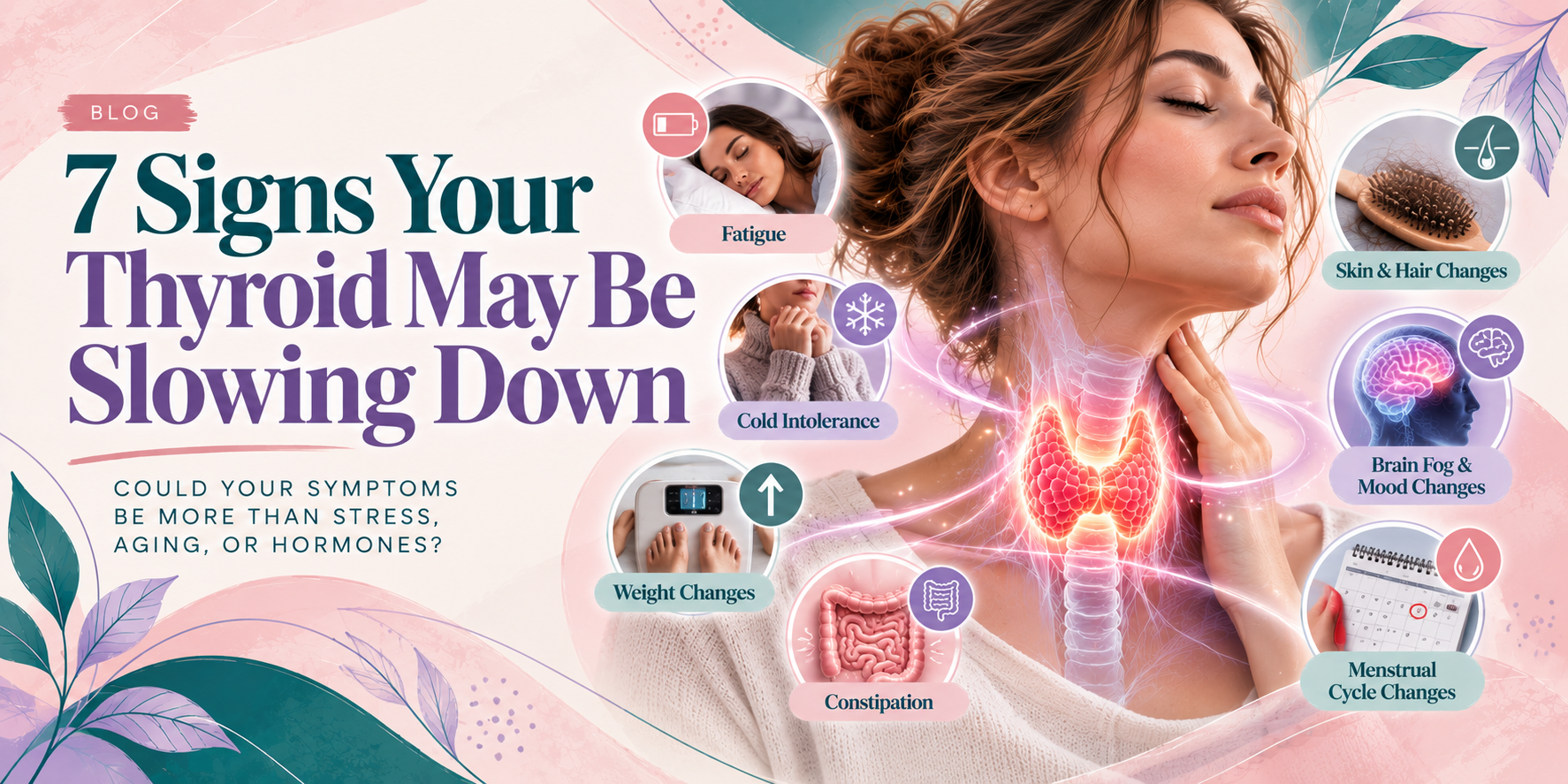
Your thyroid may be small, but its influence is anything but small.
This butterfly-shaped gland in your neck produces hormones that help regulate how your body uses energy, maintain body temperature, and support the brain, heart, muscles, and other organs. When thyroid hormone production becomes too low, many body processes can slow down. American Thyroid Association
The tricky part? Many symptoms of an underactive thyroid are also common with stress, poor sleep, nutritional deficiencies, menopause, medications, and other health conditions.
So symptoms alone cannot tell you whether your thyroid is slowing down. Blood testing is needed to confirm hypothyroidism. NIDDK
Here are seven signs worth paying attention to.
1. You're Tired Even After Getting Enough Sleep
One of the most common symptoms of hypothyroidism is fatigue.
You may notice that you feel:
Drained throughout the day
Sluggish in the morning
Less motivated than usual
Tired after activities that previously felt easy
Like you need more sleep than you used to
When thyroid hormone levels are low, the body's processes can slow down, which can contribute to decreased energy.
But fatigue is not specific to thyroid disease. Sleep disorders, anemia, nutrient deficiencies, chronic stress, depression, medications, and many other conditions can cause similar symptoms. American Thyroid Association
2. You Feel Colder Than Everyone Else
Do you constantly reach for a sweater while everyone else seems comfortable?
Increased sensitivity to cold is a classic symptom of hypothyroidism.
Because thyroid hormones help regulate how the body uses energy and generates heat, insufficient thyroid hormone can contribute to feeling unusually cold. American Thyroid Association
If you've suddenly become much more sensitive to cold, especially when it occurs alongside other symptoms on this list, it may be worth discussing with your healthcare provider.
3. Your Weight Is Increasing Without an Obvious Explanation
Unexplained weight gain can sometimes occur with hypothyroidism.
However, this is one area where context matters.
Thyroid dysfunction can contribute to changes in body weight, but not every case of weight gain is a thyroid problem. Appetite, muscle mass, physical activity, sleep, medications, menopause, insulin resistance, and other metabolic factors can all influence weight. NIDDK
That's why we don't recommend looking at the scale in isolation.
Instead, consider the bigger picture:
Weight + body composition + metabolism + sleep + hormones + nutrition + thyroid function
4. Your Digestion Has Slowed Down
Constipation is another common symptom of an underactive thyroid. American Thyroid Association
You may notice:
Less frequent bowel movements
Harder stools
More difficulty passing stool
A general feeling that digestion has slowed
Of course, constipation can also be related to inadequate fiber, insufficient fluid intake, medications, changes in activity, gut disorders, and other factors.
But when constipation appears alongside fatigue, cold intolerance, dry skin, weight changes, or other symptoms, thyroid function may be worth evaluating.
5. Your Skin or Hair Has Changed
Your thyroid can affect tissues throughout the body, including the skin and hair.
Hypothyroidism may be associated with:
Dry skin
Dry or thinning hair
Hair loss
Brittle nails
These changes don't automatically mean your thyroid is underactive. Nutritional deficiencies, hormonal changes, stress, autoimmune conditions, and other factors can also affect your skin and hair. American Thyroid Association
That's why the pattern matters more than any single symptom.
6. You're Experiencing Brain Fog, Low Mood, or Difficulty Concentrating
Your thyroid also has important connections with the brain.
Some people with hypothyroidism report:
Difficulty concentrating
Forgetfulness
Feeling mentally slowed down
Low energy
Feeling down or depressed
Brain fog
The American Thyroid Association notes that these symptoms can occur with hypothyroidism, but they can also appear with other conditions, including depression and chronic fatigue. American Thyroid Association
If your mental clarity has changed significantly, don't automatically assume it's your thyroid. Look at the whole picture.
7. Your Menstrual Cycle Has Changed
For women, thyroid health can also intersect with reproductive health.
Hypothyroidism may be associated with:
Heavy menstrual periods
Irregular periods
Changes in cycle patterns
Fertility difficulties
Thyroid function is particularly important during pregnancy and when trying to conceive, so thyroid concerns should be discussed with a qualified healthcare professional in these situations. NIDDK
And because menstrual changes can also occur during perimenopause, PCOS, changes in body weight, stress, and other conditions, testing and clinical context are important.
What If You Have Several of These Symptoms?
This is where things get interesting.
You might be thinking:
"I have almost all of these symptoms. Does that mean my thyroid is underactive?"
Not necessarily.
Hypothyroidism cannot be diagnosed based on symptoms alone because many of these symptoms overlap with other conditions. NIDDK
A healthcare professional will typically consider your symptoms, medical history, examination, and thyroid blood tests.
Common thyroid testing may include:
TSH
Thyroid-stimulating hormone is generally the initial blood test used to evaluate thyroid function.
Free T4
This measures the circulating thyroid hormone available to tissues.
Thyroid antibodies
These may be considered when autoimmune thyroid disease, such as Hashimoto's thyroiditis, is suspected. NIDDK
Your healthcare provider may determine that additional testing is appropriate based on your individual situation.
One Important Thing to Know About Thyroid Testing
If you're taking supplements, tell your healthcare provider.
Biotin, which is commonly found in hair, skin, and nail supplements and multivitamins, can interfere with some thyroid laboratory tests and make results appear abnormal when thyroid hormone levels are actually normal.
The American Thyroid Association recommends stopping biotin for 2 days before thyroid blood testing to reduce this interference. American Thyroid Association
Always follow your healthcare provider's instructions regarding medications and supplements.
Your Thyroid Is Part of a Bigger System
At Vargo Vision Functional Wellness, we don't look at symptoms in isolation.
Your thyroid interacts with multiple systems throughout the body:
Nutrition → Gut Health → Immune Regulation → Metabolism → Sleep → Stress → Thyroid → Lifestyle
For example, Hashimoto's thyroiditis is an autoimmune condition and is a common cause of hypothyroidism. The immune system, thyroid, metabolism, gut environment, nutrition, sleep, and stress can all be relevant pieces of the broader health picture. American Thyroid Association
That doesn't mean every thyroid symptom is caused by the gut or that changing one part of your lifestyle will "fix" your thyroid.
It means your symptoms deserve to be evaluated in context.
The Bottom Line
Feeling tired, gaining weight, feeling cold, experiencing constipation, noticing hair or skin changes, struggling with brain fog, or seeing changes in your menstrual cycle does not automatically mean your thyroid is slowing down.
But when several of these symptoms occur together, especially when they are new, persistent, or worsening, it may be worth discussing thyroid evaluation with your healthcare provider.
And if your thyroid tests come back normal, that doesn't mean your symptoms aren't real.
It means it's time to look at the other possible pieces of the puzzle.
At Vargo Vision Functional Wellness, the goal is to understand the bigger picture rather than focusing on one symptom at a time.
Frequently Asked Questions
What is the most common sign of an underactive thyroid?
Fatigue is one of the most commonly reported symptoms, but hypothyroidism can also cause cold intolerance, constipation, weight gain, dry skin, hair changes, mood changes, and menstrual changes. American Thyroid Association
Can you have hypothyroidism without obvious symptoms?
Yes. Hypothyroidism can develop gradually, and some people have few noticeable symptoms, particularly early in the condition. NIDDK
Can symptoms alone diagnose hypothyroidism?
No. Many thyroid symptoms overlap with other health conditions. Blood testing is needed to confirm hypothyroidism. NIDDK
Is Hashimoto's the same thing as hypothyroidism?
No. Hashimoto's is an autoimmune disease that can damage the thyroid over time and eventually cause hypothyroidism. American Thyroid Association
What thyroid test should I ask for?
TSH is generally the first test used to evaluate thyroid function. Free T4 and thyroid antibody testing may also be appropriate depending on your symptoms and clinical situation. NIDDK