
Dairy and Hormones: Should You Avoid It?

Dairy and Hormones: Should You Avoid It?
What Every Woman Should Know Before Giving Up Dairy
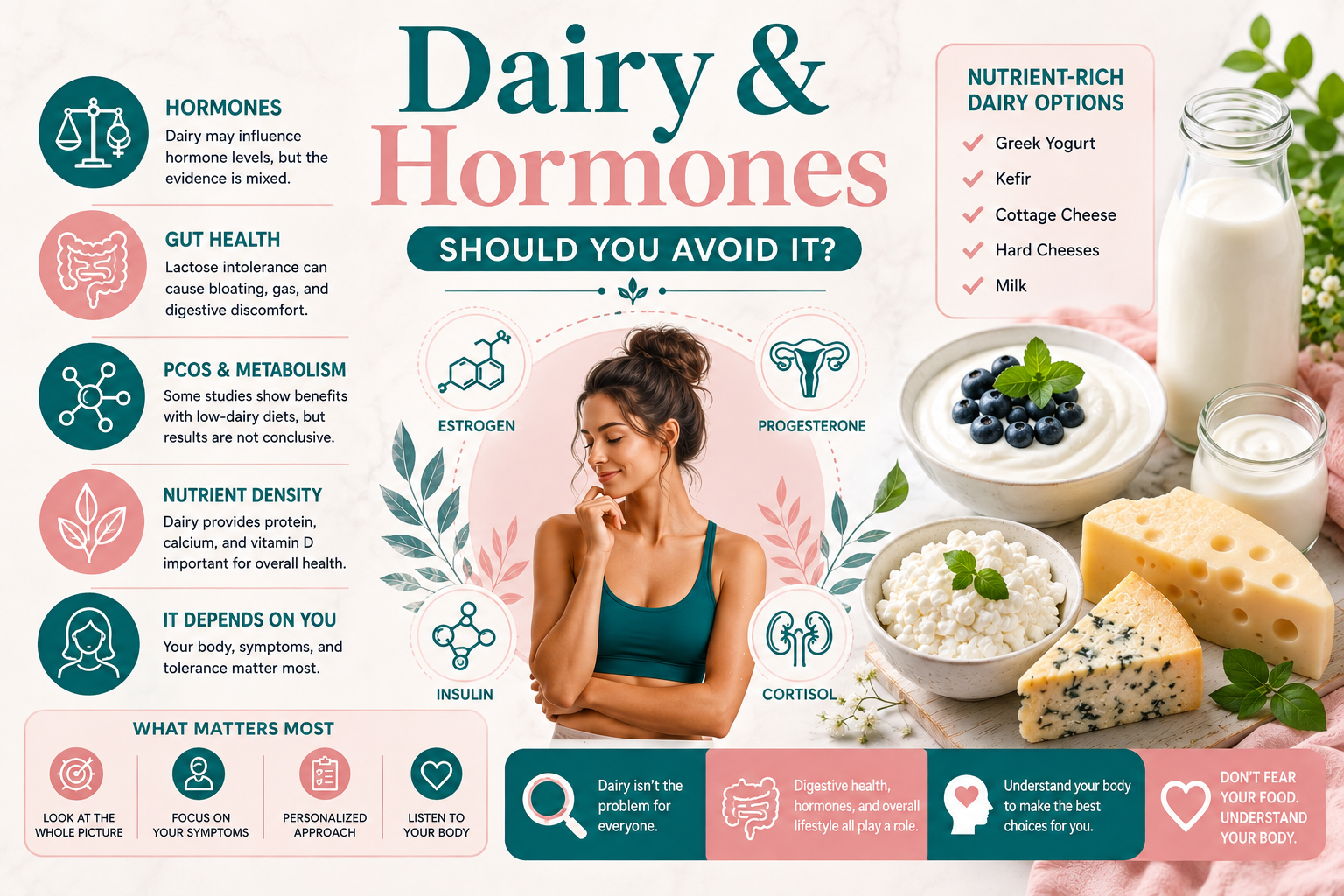
Dairy has become one of those foods that seems to be either completely loved or completely demonized.
You may have heard that dairy:
Disrupts estrogen
Increases inflammation
Causes hormone imbalance
Worsens PMOS
Triggers acne
Causes bloating
Should be eliminated for better hormone health
But is dairy actually a problem for everyone?
Not necessarily.
The relationship between dairy, hormones, digestion, and women's health is much more nuanced than social media often makes it seem.
For some women, certain dairy foods may contribute to digestive symptoms or may not fit well into their individual diet. For others, dairy can be a convenient source of protein, calcium, vitamin D, and other nutrients.
The real question isn't simply:
"Is dairy bad for hormones?"
It's:
"How does dairy fit into my individual health picture?"
Does Dairy Actually Affect Your Hormones?
This is where things get complicated.
Dairy contains naturally occurring hormones and bioactive compounds, and researchers have investigated whether dairy consumption may influence reproductive hormones.
But the evidence doesn't support a simple conclusion that eating dairy automatically causes hormone imbalance.
One observational study of healthy premenopausal women found associations between dairy intake and certain reproductive hormone concentrations, including lower estradiol and higher luteinizing hormone with some patterns of dairy consumption. However, the study did not establish that dairy causes hormone problems. (PubMed)
That's an important distinction.
An association is not the same as causation.
So if you tolerate dairy well, there isn't strong evidence that you need to eliminate it simply because you're concerned about hormone balance.
What About Dairy and Estrogen?
Estrogen is one of the hormones that often comes up in conversations about dairy.
Because dairy products contain naturally occurring hormones, it's understandable that women may wonder whether consuming dairy increases estrogen levels in the body.
But human hormone metabolism is far more complicated than simply eating a food containing hormones and assuming your own hormone levels will rise.
Your body produces, modifies, transports, and eliminates hormones through multiple interconnected systems.
Your:
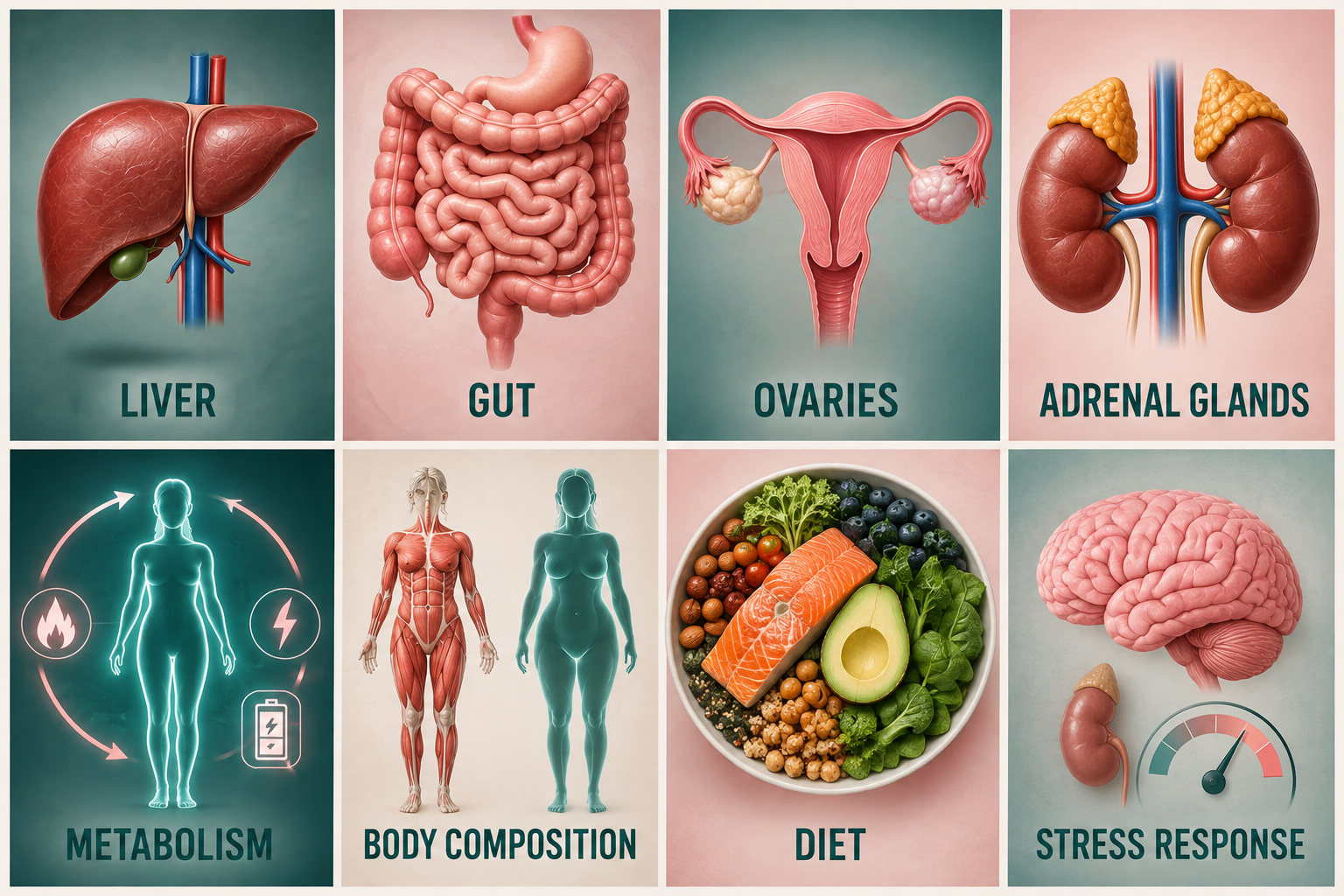
can all influence your hormonal environment.
One food doesn't determine your hormone balance.
What About Dairy and PMOS?
(Polyendocrine Metabolic Ovarian Syndrome) (Formerly known as PCOS)
This is another area where the conversation can quickly become oversimplified.
PMOS involves reproductive hormones and metabolic health, and diet can play an important role in managing overall health.
But does dairy itself cause PMOS?
There isn't enough evidence to make that claim.
A 2024 systematic review and meta-analysis found limited evidence of an association between dairy consumption and PMOS. Some intervention studies involving low-dairy and low-starch diets showed improvements in certain metabolic and hormonal measures, but the studies evaluated a combination of dietary changes, making it difficult to conclude that dairy alone was responsible for those improvements. (PubMed)
That's an important point.
If someone removes dairy and reduces refined starches, changes their calorie intake, increases vegetables, improves protein intake, and becomes more physically active, it's difficult to say that dairy was the single cause of the improvement.
Dairy May Be More Relevant to Your Gut Than Your Hormones
For some women, the bigger issue isn't hormones.
It's digestion.
Lactose is the naturally occurring sugar in milk. If your small intestine doesn't produce enough lactase the enzyme needed to digest lactose, you may experience lactose intolerance.
Symptoms can include:
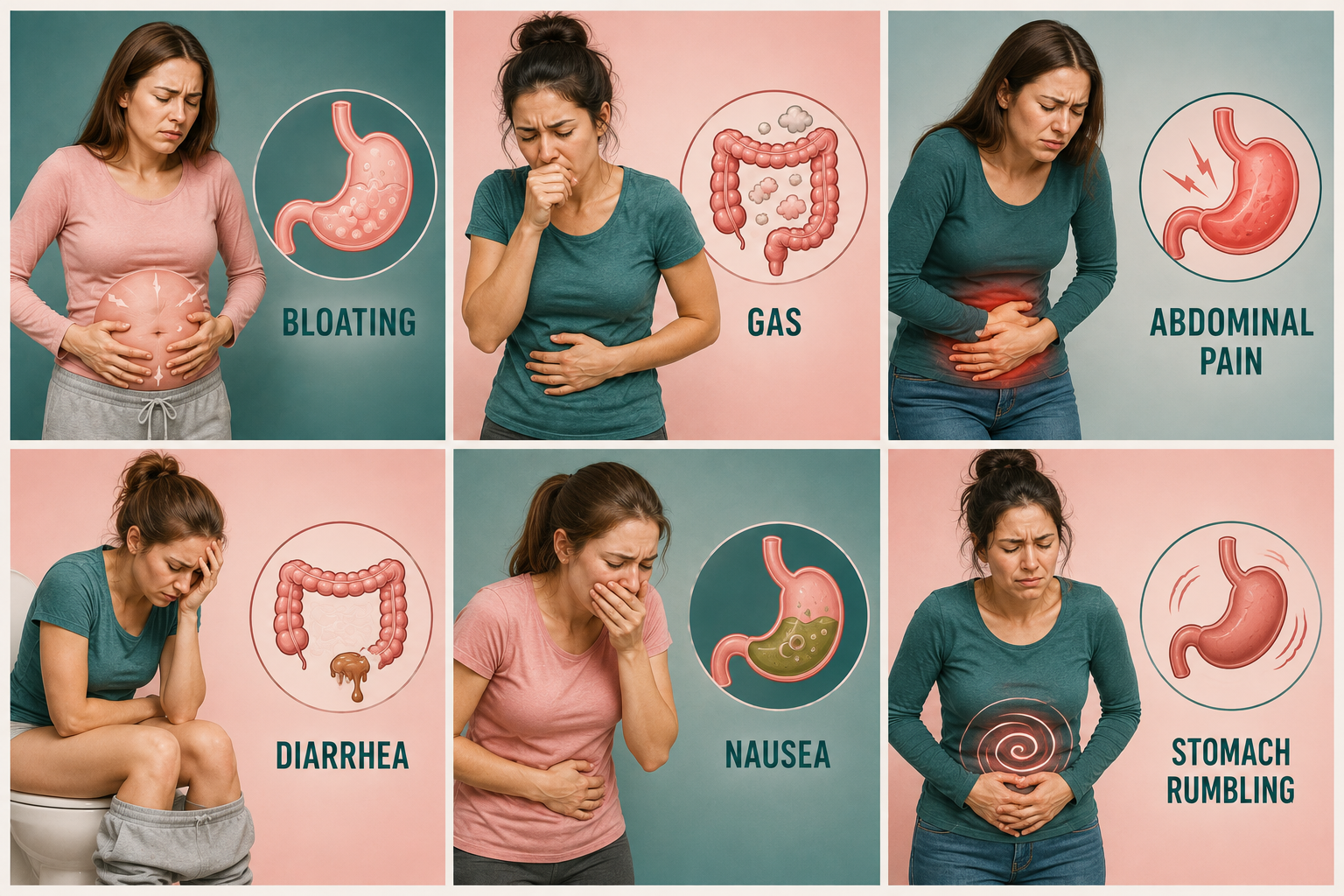
These symptoms can occur within hours of consuming lactose-containing foods. (NIDDK)
And here's something many people don't realize:
Lactose intolerance doesn't necessarily mean you have to eliminate all dairy.
Many people can tolerate some amount of lactose, and tolerance varies from person to person. Yogurt and hard cheeses may also be easier for some people to tolerate because they contain less lactose than other dairy products. (NIDDK)
Lactose Intolerance Isn't the Same as a Milk Allergy
These two are often confused.
Lactose intolerance involves difficulty digesting lactose, the sugar in milk.
A milk allergy involves an immune response to proteins in milk.
They are completely different conditions.
A milk allergy can cause a serious allergic reaction, while lactose intolerance generally causes digestive symptoms. (NIDDK)
If you suspect a true food allergy, it's important to seek appropriate medical evaluation rather than trying to diagnose yourself through elimination diets.
What If Dairy Makes You Feel Bloated?
This is where paying attention to your individual symptoms becomes important.
If you consistently notice bloating, gas, abdominal discomfort, or diarrhea after consuming dairy, don't automatically assume:
"Dairy is causing inflammation."
There may be several possibilities.
You could be reacting to lactose.
You could have another digestive condition.
You could be consuming dairy alongside other foods that contribute to your symptoms.
Or you may simply tolerate certain dairy products better than others.
Other gastrointestinal conditions including IBS, celiac disease, inflammatory bowel disease, and small intestinal bacterial overgrowth can cause symptoms that overlap with lactose intolerance. (NIDDK)
That's why persistent digestive symptoms deserve a proper evaluation.
Does Dairy Cause Inflammation?
This is another claim that deserves more nuance.
Dairy isn't automatically an inflammatory food for everyone.
Individual responses can vary, and the type of dairy matters.
A plain Greek yogurt with protein and beneficial cultures is very different nutritionally from a highly processed dessert made with dairy, added sugar, and other ingredients.
Instead of asking whether "dairy" is inflammatory as a category, look at:
What type of dairy?
How much?
How often?
What else are you eating with it?
How does your body respond?
Context matters.
You Don't Have to Choose Between Dairy and Hormone Health
If you tolerate dairy well, nutrient-dense dairy foods can fit into a balanced diet.
Depending on your individual needs, options may include:
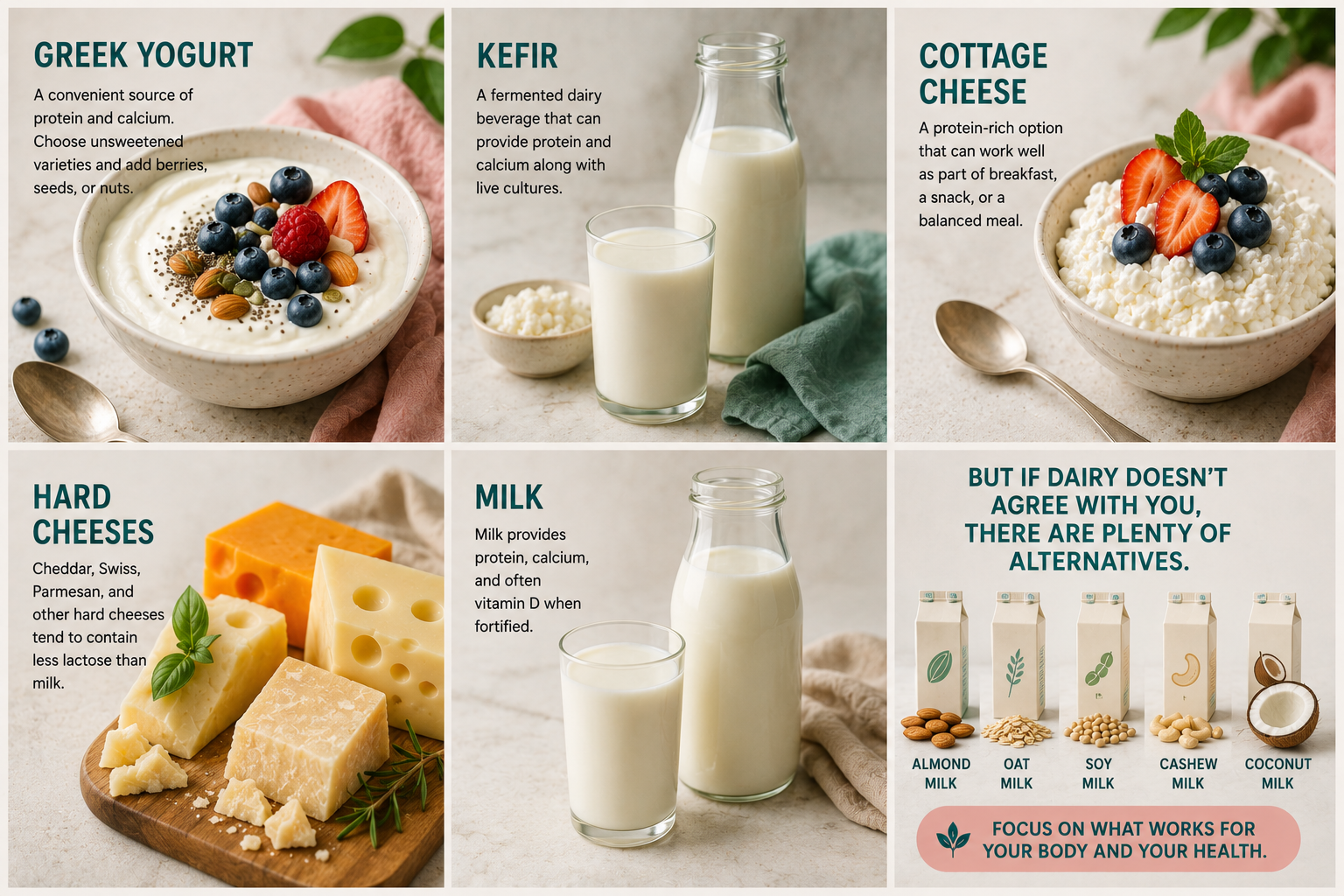
What If You Feel Better Without Dairy?
That's worth paying attention to.
But feeling better after removing dairy doesn't automatically tell you why.
You may have been consuming less added sugar because you stopped eating ice cream.
You may have changed your overall diet.
You may have reduced lactose.
Or you may genuinely feel better without certain dairy products.
This is why a structured approach can be more helpful than simply eliminating foods indefinitely.
The goal isn't to create the longest possible list of foods you can't eat.
The goal is to understand your body's individual responses.
What About Calcium and Vitamin D?
If you decide to reduce or eliminate dairy, don't forget about nutrition.
Dairy products are important sources of calcium and other nutrients for many people.
If you remove them without replacing those nutrients, your diet may become less nutritionally adequate.
Fortunately, calcium and vitamin D can also come from other sources.
Depending on your diet, options can include:
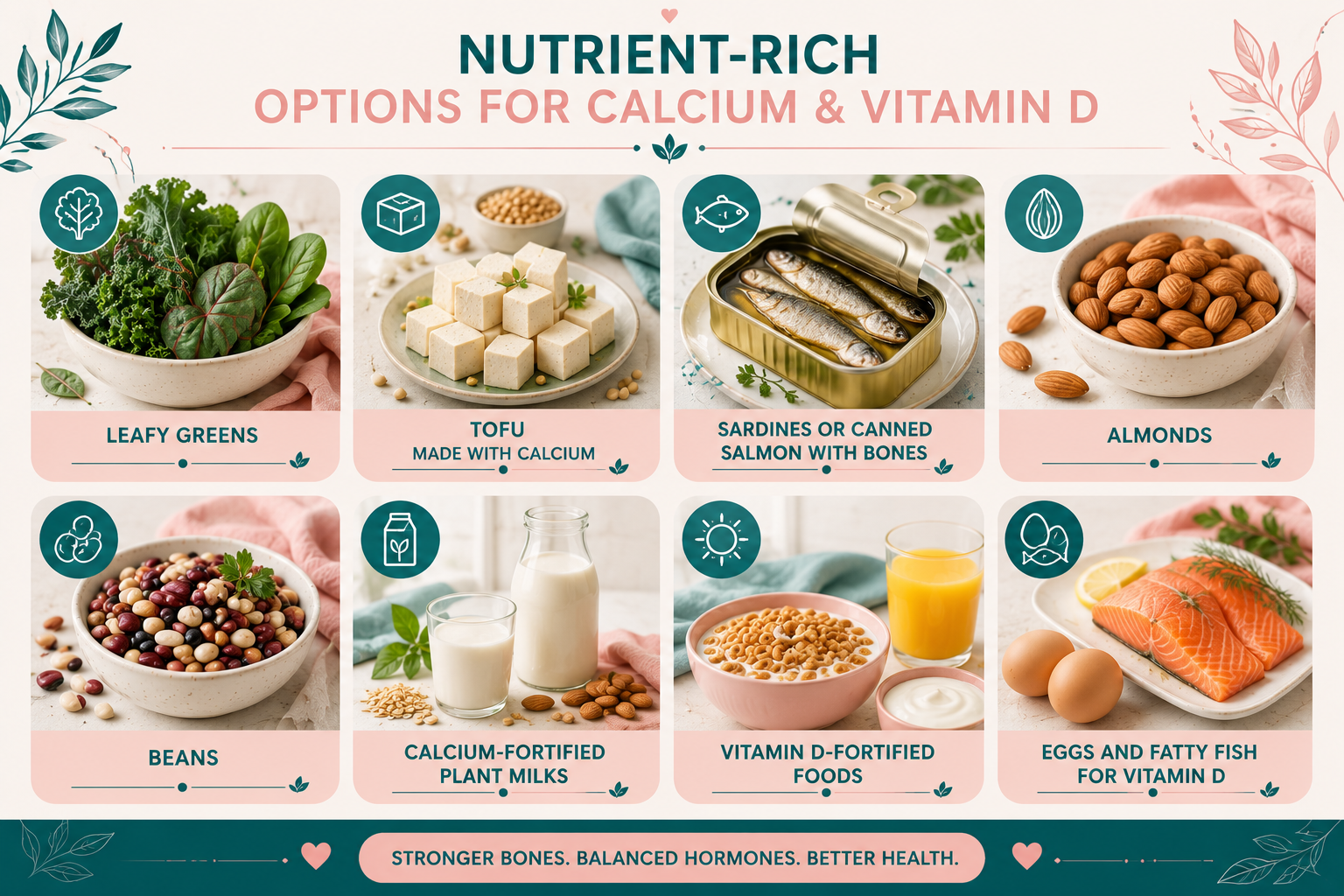
Leafy greens
Tofu made with calcium
Sardines or canned salmon with bones
Almonds
Beans
Calcium-fortified plant milks
Vitamin D-fortified foods
Eggs and fatty fish for vitamin D
If you substantially restrict dairy, consider discussing your nutritional needs with a qualified healthcare professional or dietitian. (NIDDK)
The Functional Medicine Perspective
At Vargo Vision Functional Wellness, we don't believe every woman needs to eliminate dairy to achieve hormone balance.
Instead, we want to understand the whole picture.
That may include looking at:
Hormone symptoms
Digestive symptoms
Food patterns
Blood sugar regulation
Nutrient status
Gut health
Stress
Sleep
Inflammation
Medical history
Because your symptoms rarely exist in isolation.
If you're experiencing bloating, acne, irregular periods, fatigue, weight changes, or other hormone-related concerns, eliminating one food may not address what's actually driving those symptoms.
Your body deserves a bigger conversation.
Should You Avoid Dairy?
For some women, reducing or avoiding dairy may make sense.
For others, there may be no reason to eliminate it.
Consider your individual situation.
You may want to explore reducing dairy if:
You consistently experience digestive symptoms after consuming it.
You've been diagnosed with lactose intolerance.
You have a confirmed milk allergy.
A healthcare professional has recommended a dairy-free approach.
You notice a consistent symptom pattern related to specific dairy products.
You may not need to avoid dairy if:
You tolerate it comfortably.
You're eating nutrient-dense dairy foods.
You have no clear symptoms associated with dairy.
You're eliminating it solely because of social media claims about "hormone disruption."
Personalization matters more than blanket rules.
Actionable Steps You Can Take Today
Pay attention to patterns. Notice what happens after different dairy foods.
Don't assume all dairy is the same. Milk, yogurt, cheese, and ice cream have very different nutritional profiles.
Consider lactose. If your symptoms are primarily digestive, lactose intolerance may be worth discussing with your healthcare provider.
Don't eliminate dairy unnecessarily. If you tolerate it, it can be part of a nutrient-dense diet.
If you eliminate dairy, replace the nutrients. Pay particular attention to calcium and vitamin D. (NIDDK)
Look at your entire diet. Your overall eating pattern matters more than one ingredient.
Don't confuse association with causation. Research linking dairy with hormones doesn't automatically mean dairy causes hormone imbalance.
Work with a qualified professional if you have persistent digestive or hormone symptoms.
The Bottom Line
So, should you avoid dairy for hormone balance?
Not automatically.
There isn't enough evidence to say that dairy universally disrupts women's hormones or that every woman with hormone concerns should eliminate it.
For some women, dairy may contribute to digestive symptoms particularly when lactose isn't well tolerated. For others, dairy may be a useful source of protein, calcium, and other nutrients. (NIDDK)
And when it comes to PMOS, current evidence doesn't establish dairy as a universal cause or something every woman with PMOS needs to avoid. (PubMed)
The better question isn't:
"Is dairy bad?"
It's:
"Does dairy work well for my body, my symptoms, and my overall nutritional needs?"
At Vargo Vision Functional Wellness, we believe hormone health isn't about following the most restrictive diet.
It's about understanding your body, identifying patterns, and addressing the bigger picture.
Don't fear your food. Understand your body.
Ready to Take the Next Step?
If you're struggling with bloating, digestive issues, acne, irregular cycles, fatigue, PMOS symptoms, hormone imbalance, or unexplained symptoms, we're here to help you look deeper.
Book your Free Discovery Call today:
Together, we'll look beyond individual foods and explore the factors that may be contributing to how you feel.
Frequently Asked Questions
Does dairy increase estrogen?
Dairy contains naturally occurring hormones, but that doesn't mean consuming dairy automatically causes estrogen imbalance. Human research on dairy and reproductive hormones is mixed and does not support a simple "dairy raises estrogen" conclusion. (PubMed)
Should women with PMOS avoid dairy?
Not necessarily. Current evidence doesn't establish dairy as a universal cause of PMOS. Some studies have found benefits from combined low-dairy/low-starch dietary approaches, but those results cannot be attributed to dairy elimination alone. (PubMed)
Can dairy cause bloating?
Dairy can cause bloating and other digestive symptoms in people with lactose intolerance. However, bloating has many potential causes, so persistent symptoms should be evaluated rather than automatically blamed on dairy. (NIDDK)
What can I eat instead of dairy?
If you choose or need to avoid dairy, options include calcium-fortified plant milks, tofu, leafy greens, beans, almonds, sardines, and other nutrient-dense foods. Make sure you're still meeting your calcium and vitamin D needs. (NIDDK)