Hashimoto's and Gut Health: Is There a Connection?
Hashimoto's and Gut Health: Is There a Connection?
What the gut microbiome, immune system, and thyroid may have in common
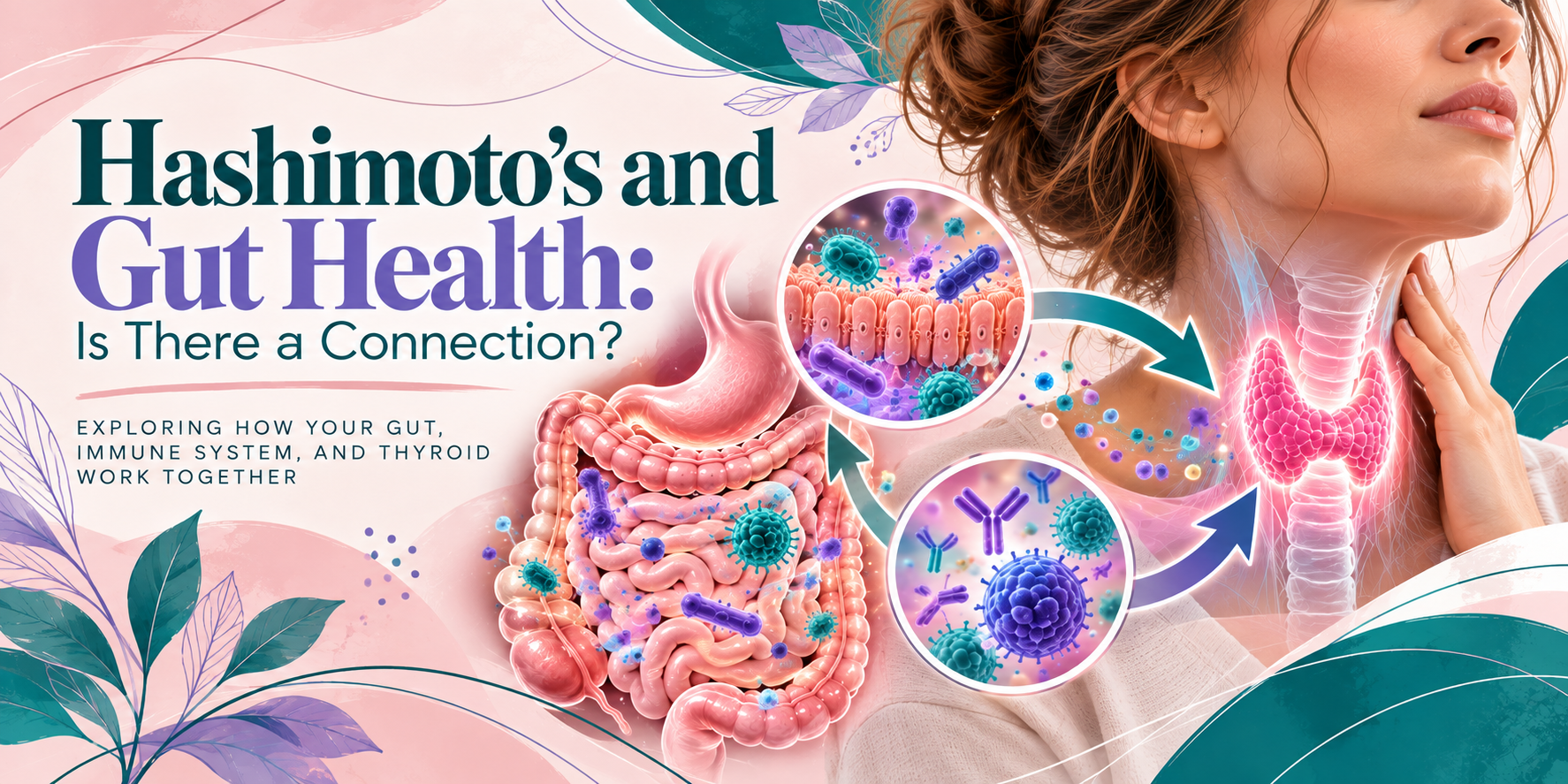
If you have Hashimoto's thyroiditis, you may have heard that gut health can influence your thyroid.
There is some scientific basis for that idea, but the relationship is more complicated than saying, "Hashimoto's starts in the gut."
Hashimoto's is an autoimmune disease in which the immune system produces antibodies that target the thyroid. Over time, this immune response can damage thyroid tissue and lead to hypothyroidism. American Thyroid Association
Researchers are increasingly studying how the gut microbiome, intestinal barrier, nutrition, and immune system may interact with thyroid autoimmunity.
So, is there a connection?
Yes, research suggests there is an association. But we are still learning exactly what the relationship means and whether changing the gut microbiome can actually change the course of Hashimoto's.
What Is Hashimoto's?
Hashimoto's thyroiditis, also called chronic autoimmune thyroiditis, occurs when the immune system mistakenly targets proteins in the thyroid.
Two antibodies commonly associated with Hashimoto's are:
Thyroid peroxidase antibodies, or TPO antibodies
Thyroglobulin antibodies, or Tg antibodies
Over time, inflammation and immune-mediated damage can reduce the thyroid's ability to produce hormones. Hashimoto's is the most common cause of hypothyroidism in the United States. American Thyroid Association
This is important because Hashimoto's is fundamentally an immune and thyroid condition, not simply a digestive disorder.
So What Does the Gut Have to Do With It?
Your gastrointestinal tract is home to trillions of microorganisms collectively known as the gut microbiome.
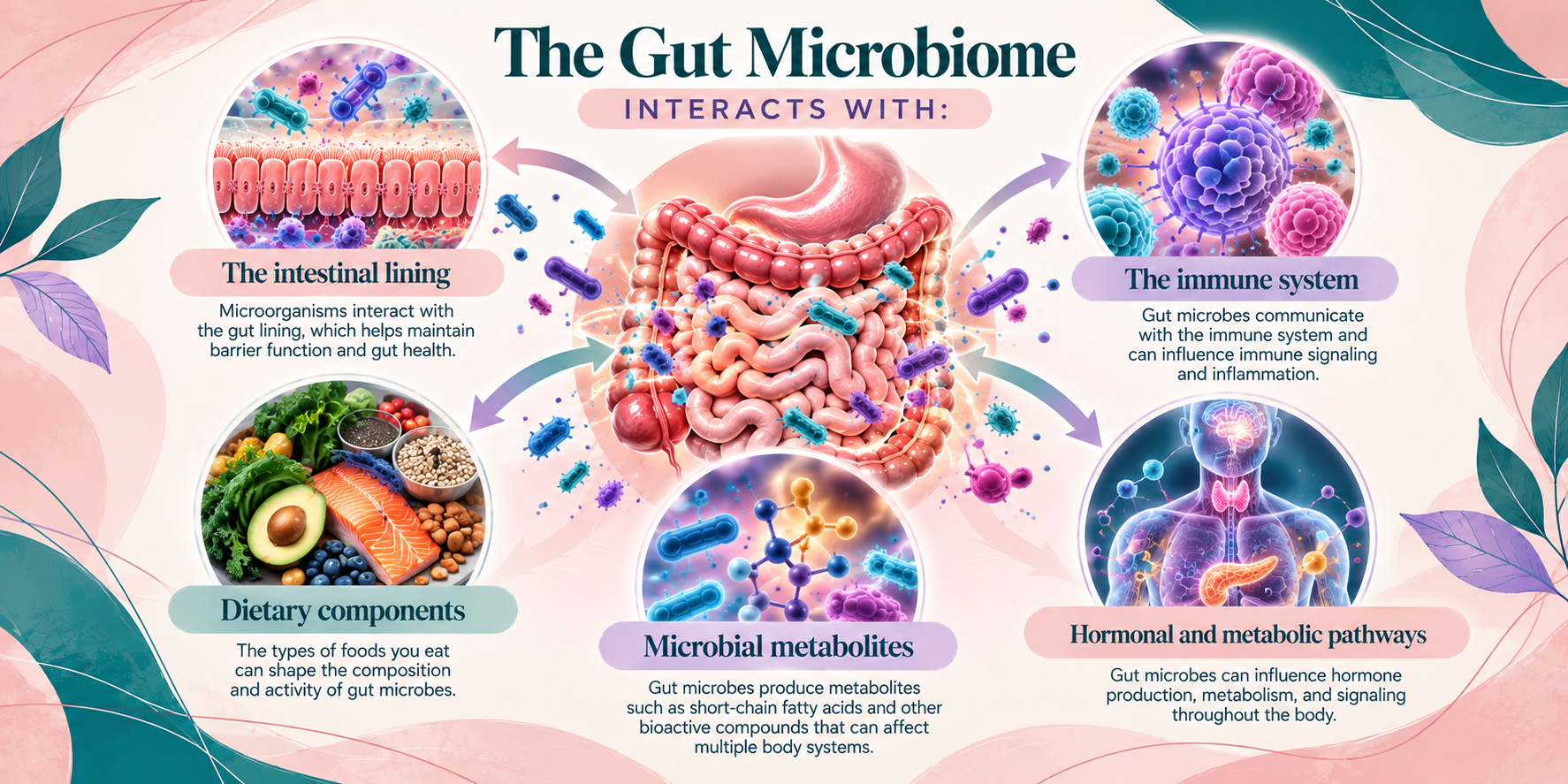
These microorganisms interact with:
The intestinal lining
The immune system
Dietary components
Microbial metabolites
Hormonal and metabolic pathways
Because a large portion of the body's immune activity is associated with the gastrointestinal tract, researchers have become increasingly interested in whether changes in the gut environment could influence autoimmune conditions.
This has led to growing interest in what researchers sometimes call the gut-thyroid axis.
A 2023 systematic review concluded that evidence supports a bidirectional relationship between the gut microbiota and thyroid homeostasis, although the mechanisms are still being investigated. PubMed
The Gut Microbiome and Hashimoto's
Several studies have found differences in the gut microbiome of people with autoimmune thyroid diseases compared with people without these conditions.
A 2021 systematic review and meta-analysis found alterations in the composition and abundance of certain gut bacteria among people with autoimmune thyroid disease. PubMed
Another systematic review that included 16 studies also found significant differences in gut microbiota diversity and composition among people with Hashimoto's thyroiditis. PubMed
But there is an important distinction:
Finding a difference does not prove that the microbiome caused Hashimoto's.
The relationship could work in several directions.
Hashimoto's and associated metabolic or dietary changes could influence the microbiome. Medications could play a role. Diet and lifestyle could affect both the microbiome and thyroid health. Or changes in the gut environment could potentially contribute to immune dysregulation.
Researchers are still working to determine which relationships are causal.
What About the Intestinal Barrier?
The intestinal lining provides an important barrier between the contents of the digestive tract and the body's internal environment.
Researchers have investigated whether changes in intestinal permeability may be associated with autoimmune thyroid disease.
This has led to theories involving:
Gut environment → Intestinal barrier → Immune signaling → Autoimmunity
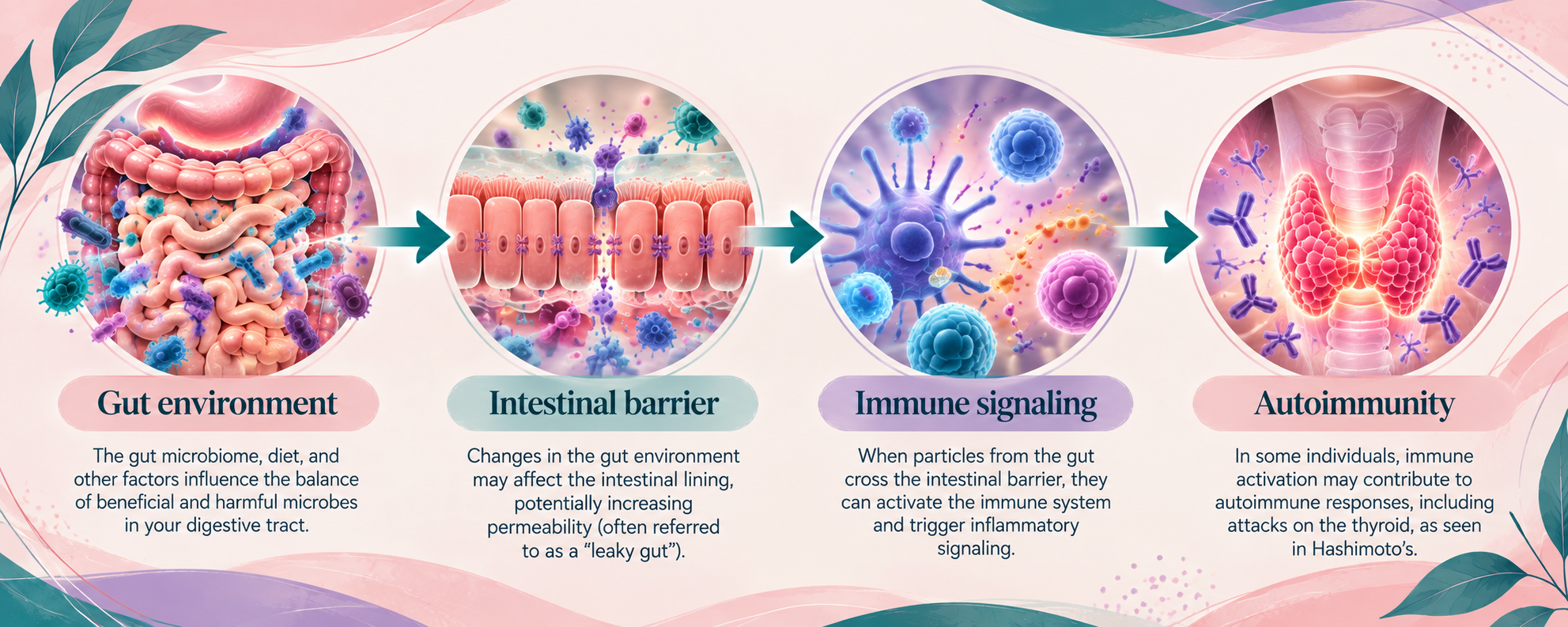
There are biological reasons this pathway is interesting, but it is too early to say that "leaky gut causes Hashimoto's."
The evidence currently supports continued investigation, not a simple cause-and-effect explanation.
The Immune System Is the Important Link
Perhaps the most interesting connection between Hashimoto's and the gut is the immune system.
Hashimoto's involves an inappropriate immune response against thyroid tissue.
Meanwhile, the gut microbiome interacts continuously with the immune system.
Certain microbial products can influence immune signaling, inflammation, and metabolic processes. This creates a potential pathway through which the gut environment could influence immune regulation.
But again, this does not mean that fixing the gut will eliminate thyroid autoimmunity.
Hashimoto's is a complex autoimmune condition involving genetic, environmental, immune, and other factors.
What About Gluten?
This is where the conversation around Hashimoto's and gut health often becomes confusing.
There is a well-established relationship between celiac disease and autoimmune thyroid disease, and people with autoimmune thyroid disease have an increased likelihood of having other autoimmune conditions, including celiac disease. American Thyroid Association
For someone with celiac disease, avoiding gluten is medically necessary.
But that is different from saying:
"Everyone with Hashimoto's should avoid gluten."
Current evidence does not support recommending a gluten-free diet for every person with Hashimoto's who does not have celiac disease. A 2025 systematic review and meta-analysis of randomized trials found the evidence for gluten-free diets in non-celiac Hashimoto's to be very uncertain, with no significant improvement in TSH, free T3, or free T4 in the pooled analysis. PubMed
Other studies have produced mixed results, which is another reason a universal gluten-free recommendation is not supported. PubMed
The takeaway?
Test before you restrict.
If celiac disease is suspected, appropriate testing should be discussed with a healthcare professional before starting a gluten-free diet, because eliminating gluten beforehand can affect diagnostic testing.
Could Diet Still Matter?
Absolutely.
That does not mean you need a highly restrictive "Hashimoto's diet."
Research into nutritional interventions for Hashimoto's is still developing, and there is currently no single diet proven to be ideal for everyone with the condition. PubMed
Instead, a strong nutritional foundation may include:
Dietary variety
Eating a wide range of vegetables, fruits, legumes, whole grains, nuts, seeds, and other minimally processed foods can provide fiber and a broad range of nutrients.
Adequate protein
Protein supports muscle, metabolism, immune function, and overall nutritional status.
Fiber-rich foods
Fiber provides fuel for many beneficial gut microorganisms and can support regular bowel function.
Nutrient adequacy
Nutrients such as iron, vitamin B12, vitamin D, iodine, and selenium can be relevant to thyroid and overall health. But more is not always better, and supplementation should be individualized.
Minimally processed foods
A dietary pattern centered around nutrient-dense whole foods can support metabolic and cardiovascular health without requiring unnecessary elimination.
What About Probiotics?
You may have also heard that probiotics can "balance the gut" and improve Hashimoto's.
The research is interesting, but it is not yet strong enough to say that everyone with Hashimoto's needs a probiotic.
A systematic review and meta-analysis examining probiotics, prebiotics, and synbiotics in thyroid disease found potential therapeutic effects but also highlighted the need for more research. PubMed
Different probiotic strains can have very different effects, so the phrase "take a probiotic for Hashimoto's" is much less precise than it sounds.
Food, dietary pattern, medications, symptoms, and individual tolerance all matter.
Don't Forget Thyroid Treatment
This is an important distinction.
Supporting gut health should not replace appropriate thyroid treatment.
When Hashimoto's results in hypothyroidism, thyroid hormone replacement with levothyroxine is the standard treatment for restoring thyroid hormone levels. American Thyroid Association
Improving nutrition, sleep, physical activity, stress management, or gut health can be part of a broader wellness strategy, but these approaches should not be used as a substitute for medically indicated thyroid hormone replacement.
A Bigger Picture May Be More Helpful
Instead of asking:
"How do I fix my gut so I can cure Hashimoto's?"
A more useful question may be:
"What factors could be supporting or affecting my overall thyroid and immune health?"
That might include:
Nutrition → Gut Health → Immune Regulation → Metabolism → Sleep → Stress → Thyroid → Lifestyle
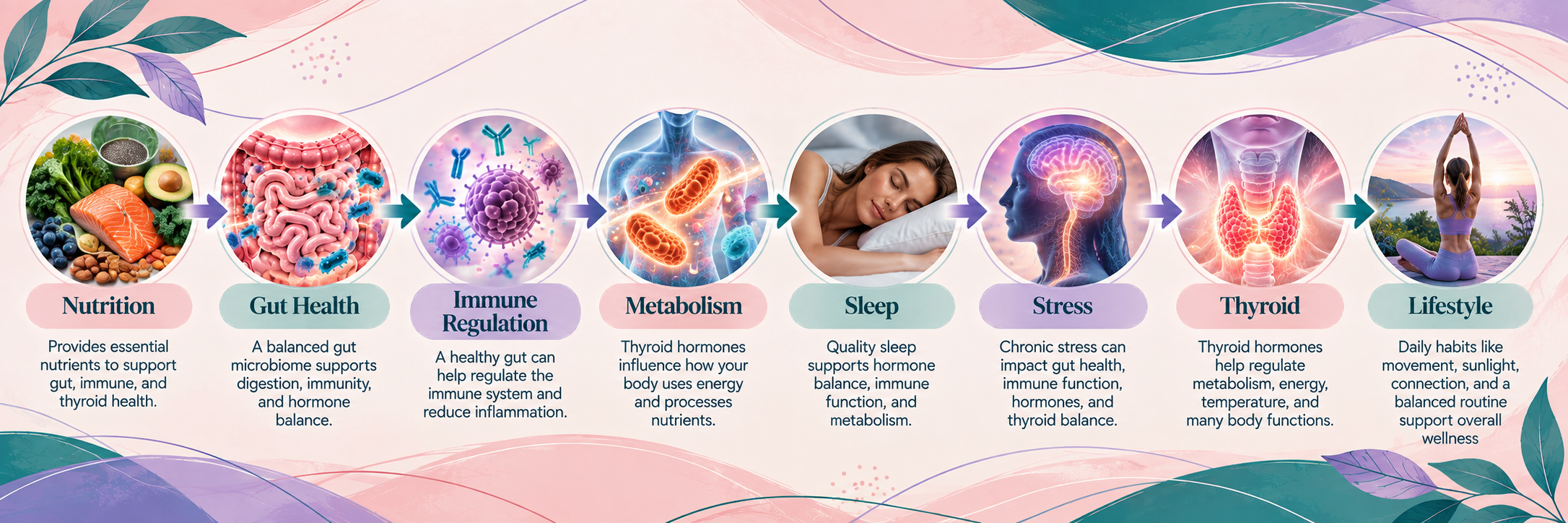
Each piece can provide useful information.
And sometimes the most important finding is not a gut imbalance at all.
For example, persistent fatigue could be related to inadequately treated hypothyroidism, poor sleep, iron deficiency, medication effects, menopause, depression, or another medical condition. The American Thyroid Association notes that many symptoms commonly attributed to thyroid disease have multiple possible causes. American Thyroid Association
What Can You Do to Support Gut and Thyroid Health?
Rather than immediately eliminating foods or purchasing a long list of supplements, start with the fundamentals.
1. Eat a diverse diet
Aim for variety rather than perfection.
2. Prioritize fiber
Vegetables, fruits, legumes, whole grains, nuts, and seeds can provide different types of dietary fiber.
3. Include adequate protein
Protein is important for maintaining muscle and supporting overall nutritional status.
4. Address nutrient deficiencies
If symptoms or laboratory findings suggest a deficiency, work with your healthcare provider to identify and correct the underlying issue.
5. Support regular digestion
Persistent constipation, diarrhea, bloating, abdominal pain, or other gastrointestinal symptoms deserve evaluation rather than automatically being labeled as "dysbiosis."
6. Prioritize sleep
Sleep influences immune regulation, metabolism, appetite, and overall well-being.
7. Manage chronic stress
Stress does not cause Hashimoto's by itself, but chronic stress can influence sleep, behavior, metabolism, and immune signaling.
8. Take thyroid medication correctly
If you take levothyroxine, follow your prescribing clinician's instructions carefully. Thyroid hormone dosing needs to be monitored through appropriate laboratory testing. American Thyroid Association
The Bottom Line
Hashimoto's and gut health are connected, but the relationship is not as simple as "bad gut health causes Hashimoto's."
Research shows that people with Hashimoto's can have differences in gut microbiome composition, and scientists are investigating how the gut, intestinal barrier, immune system, metabolism, and thyroid communicate with one another. PubMed
At the same time, we do not yet have enough evidence to say that changing the microbiome can prevent, reverse, or cure Hashimoto's.
The most practical approach is to look at the whole system.
Support your nutrition.
Take care of your gut.
Correct documented deficiencies.
Prioritize sleep.
Manage stress.
Stay physically active.
Monitor thyroid function.
And use evidence-based medical treatment when it is needed.
Your gut may be part of the story.
It is just not the entire story.
Ready to Look Deeper?
If you have Hashimoto's along with persistent digestive symptoms, fatigue, changes in weight, nutrient deficiencies, or difficulty feeling well despite having your thyroid levels monitored, it may be worth discussing the bigger picture with your healthcare provider.
A thoughtful evaluation can help determine whether thyroid function, nutrition, gastrointestinal health, medications, nutrient status, sleep, or another factor may be contributing to how you feel.
Frequently Asked Questions
Can gut health cause Hashimoto's?
There is currently not enough evidence to say that poor gut health causes Hashimoto's. Research does show associations between autoimmune thyroid disease and changes in gut microbiota, but the direction and clinical significance of these relationships remain uncertain. PubMed
Should everyone with Hashimoto's avoid gluten?
No. A gluten-free diet is essential for people with celiac disease, but current evidence does not support routinely recommending gluten avoidance to every person with non-celiac Hashimoto's. PubMed
Is celiac disease associated with Hashimoto's?
Yes. Hashimoto's and celiac disease can coexist, reflecting an association between autoimmune conditions. If celiac disease is suspected, appropriate testing should be discussed with a healthcare professional. American Thyroid Association
Can probiotics help Hashimoto's?
Research into probiotics and thyroid disease is ongoing. Some studies suggest potential benefits, but evidence is not strong enough to recommend one probiotic or one strain for everyone with Hashimoto's. PubMed
What foods are best for Hashimoto's?
There is no single proven "Hashimoto's diet." A varied, nutrient-dense dietary pattern that provides adequate protein, fiber, vitamins, and minerals is a reasonable foundation. Individual needs should guide further dietary changes. PubMed
Can improving gut health cure Hashimoto's?
There is currently no evidence that dietary changes, probiotics, or gut-focused therapies can cure Hashimoto's. If Hashimoto's has caused hypothyroidism, appropriate thyroid hormone treatment may be necessary. American Thyroid Association
What should I do if I have Hashimoto's and digestive symptoms?
Persistent bloating, abdominal pain, diarrhea, constipation, unexplained weight loss, or nutrient deficiencies should be evaluated rather than automatically attributed to "leaky gut" or dysbiosis. Your healthcare provider can help determine whether conditions such as celiac disease, medication effects, food intolerance, or another gastrointestinal condition should be considered.