
Hysterectomy and Endometriosis: What Women Should Know
Hysterectomy and Endometriosis: What Women Should Know
Understanding Why Removing the Uterus Is Not Always the Answer to Endometriosis
For many women living with endometriosis, there comes a point when the conversation shifts from symptom management to more aggressive treatment options.
After years of painful periods, chronic pelvic pain, digestive issues, fatigue, infertility struggles, and repeated treatments that may not have provided lasting relief, some women are told:
"Maybe it's time for a hysterectomy."
For women who have spent years suffering, a hysterectomy can sound like a permanent solution. The idea of removing the uterus may seem like the final step toward ending the pain and reclaiming their lives.
But here's what many women are not told:
A hysterectomy is not considered a cure for endometriosis.
This is one of the most important conversations women deserve to have before making a life-changing decision.
At Vargo Vision Functional Wellness, we believe women deserve a complete understanding of their condition and all available options. Through a functional medicine approach, we focus on understanding the root causes driving inflammation, hormone imbalance, immune dysfunction, gut health issues, and nervous system dysregulation that contribute to endometriosis symptoms.
Let's explore what a hysterectomy can and cannot do for endometriosis and why addressing the whole body matters.
What Is Endometriosis?
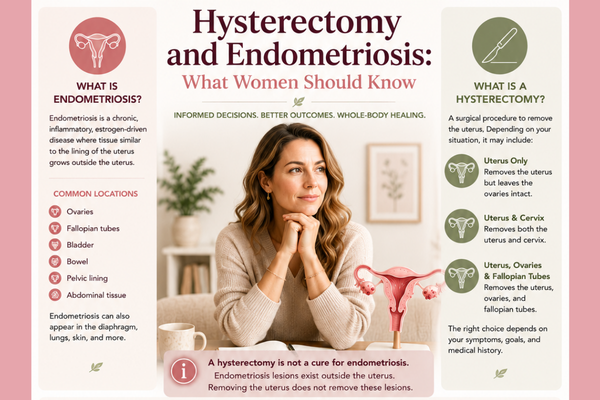
Endometriosis is a chronic inflammatory, estrogen-driven disease in which tissue similar to the lining of the uterus grows outside the uterus.
However, these lesions are not identical to normal uterine tissue.
Research has shown that endometriosis lesions can:
Create their own blood supply
Stimulate nerve growth
Produce inflammatory chemicals
Interact with the immune system
Respond to estrogen
These lesions are commonly found on:
Ovaries
Fallopian tubes
Bladder
Bowel
Pelvic lining
Abdominal tissue
They have also been found in:
The diaphragm
Lungs
Skin
Surgical scars
Nerves
Rarely, even the brain
This is one reason endometriosis is increasingly recognized as a whole-body inflammatory condition not simply a reproductive disorder.
What Is a Hysterectomy?
A hysterectomy is a surgical procedure that removes the uterus.
Depending on the situation, surgery may involve removal of:
The Uterus Only
A partial or total hysterectomy removes the uterus while leaving the ovaries intact.
The Uterus and Cervix
A total hysterectomy removes both structures.
The Uterus, Ovaries, and Fallopian Tubes
A hysterectomy with bilateral salpingo-oophorectomy removes the uterus, ovaries, and fallopian tubes.
The type of surgery performed depends on symptoms, age, reproductive goals, and physician recommendations.
Why Is Hysterectomy Recommended for Endometriosis?
A hysterectomy is often considered when:
Symptoms are severe
Fertility is no longer desired
Previous treatments have failed
Adenomyosis is also present
Chronic bleeding is affecting quality of life
Some women experience significant symptom relief after surgery.
However, understanding the limitations of hysterectomy is critical.
A Hysterectomy Does Not Remove Endometriosis
This is one of the biggest misconceptions surrounding treatment.
Endometriosis lesions exist outside the uterus.
If lesions remain on:
The bowel
Bladder
Pelvic lining
Ovaries
Diaphragm
Nerves
Removing the uterus alone does not remove those lesions.
Many women are surprised to learn that pain can continue even after a hysterectomy if underlying lesions and inflammation remain active.
This is why many endometriosis specialists emphasize excision of endometriosis lesions rather than relying solely on hysterectomy.
Why Symptoms Sometimes Return After Hysterectomy
Some women experience symptom recurrence months or years after surgery.
There are several possible reasons.
Residual Endometriosis Lesions
Microscopic lesions may remain after surgery.
These lesions can continue producing inflammatory chemicals and interacting with surrounding tissues.
Ongoing Estrogen Exposure
Endometriosis is an estrogen-sensitive condition.
If ovaries remain intact after surgery, estrogen production continues.
Even when ovaries are removed, other tissues in the body can still produce smaller amounts of estrogen.
This means endometriosis lesions may continue to receive hormonal stimulation.
Chronic Inflammation
Inflammation is one of the primary drivers of symptoms.
Even after surgery, unresolved inflammation may continue contributing to:
Pain
Fatigue
Brain fog
Digestive symptoms
Immune dysfunction
Nervous System Sensitization
Years of chronic pain can alter the nervous system.
The brain and body may become more sensitive to pain signals over time.
This process is often called central sensitization.
Removing tissue does not automatically reverse nervous system dysregulation.
The Overlooked Role of Adenomyosis
One reason hysterectomy may help some women is because they actually have adenomyosis in addition to endometriosis.
Adenomyosis occurs when endometrial-like tissue grows within the muscular wall of the uterus.
Common symptoms include:
Heavy bleeding
Severe cramping
Enlarged uterus
Pelvic pressure
Since adenomyosis affects the uterus itself, hysterectomy can eliminate adenomyosis-related symptoms.
However, it still may not address endometriosis lesions located elsewhere in the body.
Endometriosis Is More Than a Reproductive Disease
One of the biggest misconceptions about endometriosis is that it only affects reproductive organs.
In reality, endometriosis affects:
Hormones
Immune function
Gut health
Inflammation pathways
Nervous system regulation
Mental health
Energy production
Many women experience:
Fatigue
IBS-like symptoms
Bloating
Anxiety
Depression
Brain fog
Food sensitivities
Sleep disturbances
A hysterectomy cannot address these underlying contributors on its own.
A Functional Medicine Perspective on Endometriosis
Functional medicine asks a different question:
Why is the body creating an environment where endometriosis can thrive?
Rather than focusing solely on symptom removal, we explore the deeper drivers contributing to disease progression.
Root Causes Functional Medicine May Explore
Estrogen Dominance
Many women with endometriosis experience excess estrogen activity.
Estrogen may contribute to:
Lesion growth
Inflammation
Heavy bleeding
Breast tenderness
PMS symptoms
Supporting healthy estrogen metabolism becomes an important piece of care.
Gut Dysfunction
The gut microbiome influences:
Hormone metabolism
Immune regulation
Inflammation
Nutrient absorption
Many women with endometriosis also struggle with:
Constipation
Diarrhea
Bloating
Food sensitivities
Addressing gut health may help support hormone balance and reduce inflammatory burden.
Immune Dysregulation
Research increasingly shows that endometriosis involves altered immune function.
The immune system may fail to effectively clear abnormal tissue while simultaneously promoting inflammation.
Supporting immune balance becomes a key component of healing.
Chronic Stress and Nervous System Imbalance
Living with chronic pain can significantly impact:
Cortisol patterns
Sleep quality
Emotional health
Pain sensitivity
As a PMHNP-BC, I often see how physical symptoms and emotional health are deeply connected.
Functional Medicine Strategies That May Support Healing
Anti-Inflammatory Nutrition
Nutrition can help reduce inflammatory burden.
Focus on:
Vegetables
Healthy fats
Lean proteins
Omega-3-rich foods
Fiber-rich foods
Reduce:
Ultra-processed foods
Excess sugar
Artificial additives
Alcohol
Supporting Estrogen Detoxification
Healthy estrogen metabolism relies on:
Liver function
Gut health
Adequate fiber
Regular bowel movements
Supporting these pathways may help reduce estrogen burden.
Nervous System Regulation
Helpful tools may include:
Breathwork
Meditation
Therapy
Gentle movement
Sleep optimization
Healing requires supporting both body and mind.
Personalized Functional Medicine Testing
Testing may evaluate:
Hormones
Gut health
Nutrient deficiencies
Cortisol patterns
Inflammatory markers
Personalized data can help guide individualized care.
Questions to Ask Before Considering a Hysterectomy
If you're considering surgery, consider discussing:
Have all endometriosis lesions been identified?
Is adenomyosis present?
What type of hysterectomy is being recommended?
Will ovaries remain?
What are the long-term risks and benefits?
How likely are symptoms to improve?
What supportive therapies should be considered alongside surgery?
Informed decisions lead to better outcomes.
Actionable Takeaways
1. Understand That Hysterectomy Is Not a Cure
Removing the uterus does not automatically eliminate endometriosis.
2. Learn About Adenomyosis
Adenomyosis and endometriosis often coexist and may influence treatment decisions.
3. Address Root Causes
Hormones, inflammation, gut health, immunity, and stress all matter.
4. Support Whole-Body Healing
Surgery may be one tool but it should not be the only conversation.
5. Advocate for Yourself
You deserve providers who help you understand all of your options.
Women Deserve Complete Information
A hysterectomy can be an appropriate treatment option for some women, particularly when adenomyosis, severe bleeding, or other uterine conditions are present.
But it is not a universal solution for endometriosis.
Women deserve to understand that endometriosis is a complex inflammatory disease involving much more than the uterus alone.
At Vargo Vision Functional Wellness, we believe women deserve root-cause care that supports hormones, gut health, immune function, inflammation, and overall wellness.
You deserve answers.
You deserve options.
And you deserve a healthcare team that sees the whole picture.
Ready to Take the Next Step?
If you're struggling with painful periods, chronic pelvic pain, bloating, fatigue, hormone imbalance, or endometriosis symptoms, you don't have to navigate this journey alone.
Book your Free Discovery Call today:
https://vargovision.com/book-now
Together, we can explore the root contributors affecting your health and create a personalized plan that supports long-term healing.
Your symptoms are real.
Your health matters.
And you deserve more than symptom suppression.
Frequently Asked Questions
Does a hysterectomy cure endometriosis?
No. Because endometriosis lesions often exist outside the uterus, a hysterectomy does not guarantee elimination of the disease.
Why do some women still have pain after a hysterectomy?
Residual lesions, inflammation, nervous system sensitization, and hormonal influences may continue contributing to symptoms.
What is the difference between adenomyosis and endometriosis?
Adenomyosis affects the uterine muscle, while endometriosis occurs outside the uterus.
Should ovaries be removed during a hysterectomy for endometriosis?
This decision is highly individualized and should be discussed with a qualified healthcare provider.
Can functional medicine support women before or after surgery?
Yes. Functional medicine focuses on supporting inflammation, hormone balance, gut health, immune function, and overall recovery.