
Why Chronic Inflammation Keeps Your Hormones Out of Balance

Why Chronic Inflammation Keeps Your Hormones Out of Balance
The Hidden Connection Between Inflammation and Hormone Health
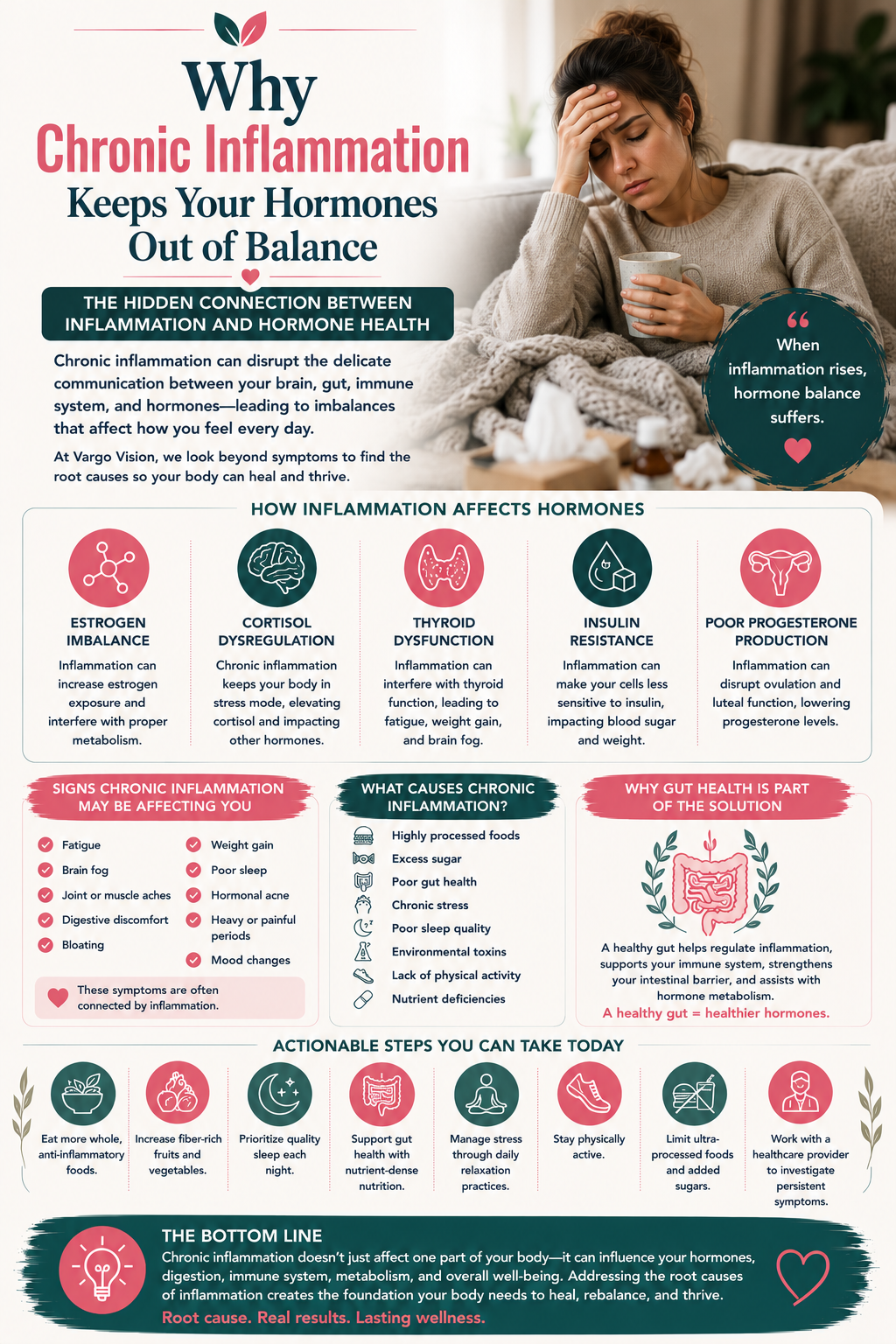
When most women think about hormone imbalances, they often think about estrogen, progesterone, or thyroid hormones.
What many don't realize is that chronic inflammation may be one of the biggest reasons hormones struggle to stay in balance.
Inflammation isn't always something you can see or feel. It can quietly affect multiple systems throughout the body, including your gut, immune system, metabolism, and hormone production.
At Vargo Vision Functional Wellness, we don't just ask which hormone is out of balance—we ask why it's happening in the first place.
What Is Chronic Inflammation?
Inflammation is your body's natural response to injury or infection.
In the short term, it's a healthy and necessary part of healing.
However, when inflammation becomes chronic, it can begin to interfere with normal body function.
Unlike acute inflammation, chronic inflammation may persist for months or even years without obvious signs, gradually contributing to hormone imbalances and other health concerns.
How Inflammation Affects Hormones
Hormones rely on healthy communication between the brain, adrenal glands, thyroid, ovaries, liver, and gut.
When chronic inflammation is present, these communication pathways may become disrupted.
Inflammation may contribute to:
Estrogen imbalance
Cortisol dysregulation
Thyroid dysfunction
Insulin resistance
Poor progesterone production
This is why many women experience multiple symptoms rather than just one.
Common Signs Chronic Inflammation May Be Affecting You
Chronic inflammation can look different for everyone, but common symptoms include:
Fatigue
Brain fog
Joint or muscle aches
Digestive discomfort
Bloating
Weight gain
Poor sleep
Hormonal acne
Heavy or painful periods
Mood changes
These symptoms are often dismissed individually, but together they may point toward an underlying inflammatory process.
What Causes Chronic Inflammation?
Many everyday factors can contribute to ongoing inflammation, including:
Highly processed foods
Excess sugar
Poor gut health
Chronic stress
Poor sleep quality
Environmental toxins
Lack of physical activity
Nutrient deficiencies
Over time, these factors may place additional stress on the body's ability to maintain healthy hormone balance.
Why Gut Health Is Part of the Solution
The gut plays a major role in regulating inflammation.
A healthy gut microbiome helps support the immune system, strengthen the intestinal barrier, and assist with hormone metabolism.
When gut health is compromised, inflammation can increase and hormone balance may become more difficult to maintain.
This is one reason functional medicine often begins with the gut.
The Functional Medicine Approach
Rather than masking symptoms, functional medicine works to identify the underlying contributors to chronic inflammation.
This may include evaluating:
Nutrition
Gut health
Hormone balance
Lifestyle habits
Sleep quality
Stress levels
Environmental exposures
The goal is to create a personalized plan that supports the body's natural ability to heal.
Actionable Steps You Can Take Today
Eat more whole, anti-inflammatory foods.
Increase fiber-rich fruits and vegetables.
Prioritize quality sleep each night.
Support gut health with nutrient-dense nutrition.
Manage stress through daily relaxation practices.
Stay physically active.
Limit ultra-processed foods and added sugars.
Work with a healthcare provider to investigate persistent symptoms.
Small changes practiced consistently can have a meaningful impact on long-term health.
The Bottom Line
Chronic inflammation doesn't just affect one part of the body—it can influence your hormones, digestion, immune system, metabolism, and overall well-being.
At Vargo Vision Functional Wellness, we believe that lasting hormone balance begins by addressing the root contributors driving inflammation rather than simply treating the symptoms.
When inflammation is reduced, your body has a stronger foundation for healthier hormone function and long-term wellness.
Ready to Take the Next Step?
If you're experiencing hormone imbalances, endometriosis, PMOS, fatigue, digestive issues, or persistent inflammation, we're here to help.
Book your Free Discovery Call today:
https://vargovision.com/book-now
Together, we'll uncover the root contributors affecting your health and create a personalized plan designed to support long-term wellness.
Frequently Asked Questions
Can chronic inflammation affect hormones?
Yes. Chronic inflammation may interfere with hormone production, communication, metabolism, and balance throughout the body.
How does gut health influence inflammation?
A healthy gut helps regulate immune function, supports the intestinal barrier, and contributes to healthy hormone metabolism, all of which may help reduce chronic inflammation.
Can lifestyle changes help reduce inflammation?
Yes. A nutrient-dense diet, quality sleep, stress management, regular movement, and supporting gut health can all contribute to reducing inflammation and promoting overall wellness.