
Why Women With Endometriosis Are Told to “Just Get Pregnant”
Why Women With Endometriosis Are Told to “Just Get Pregnant”
The Truth Behind One of the Most Common and Misunderstood, Pieces of Endometriosis Advice
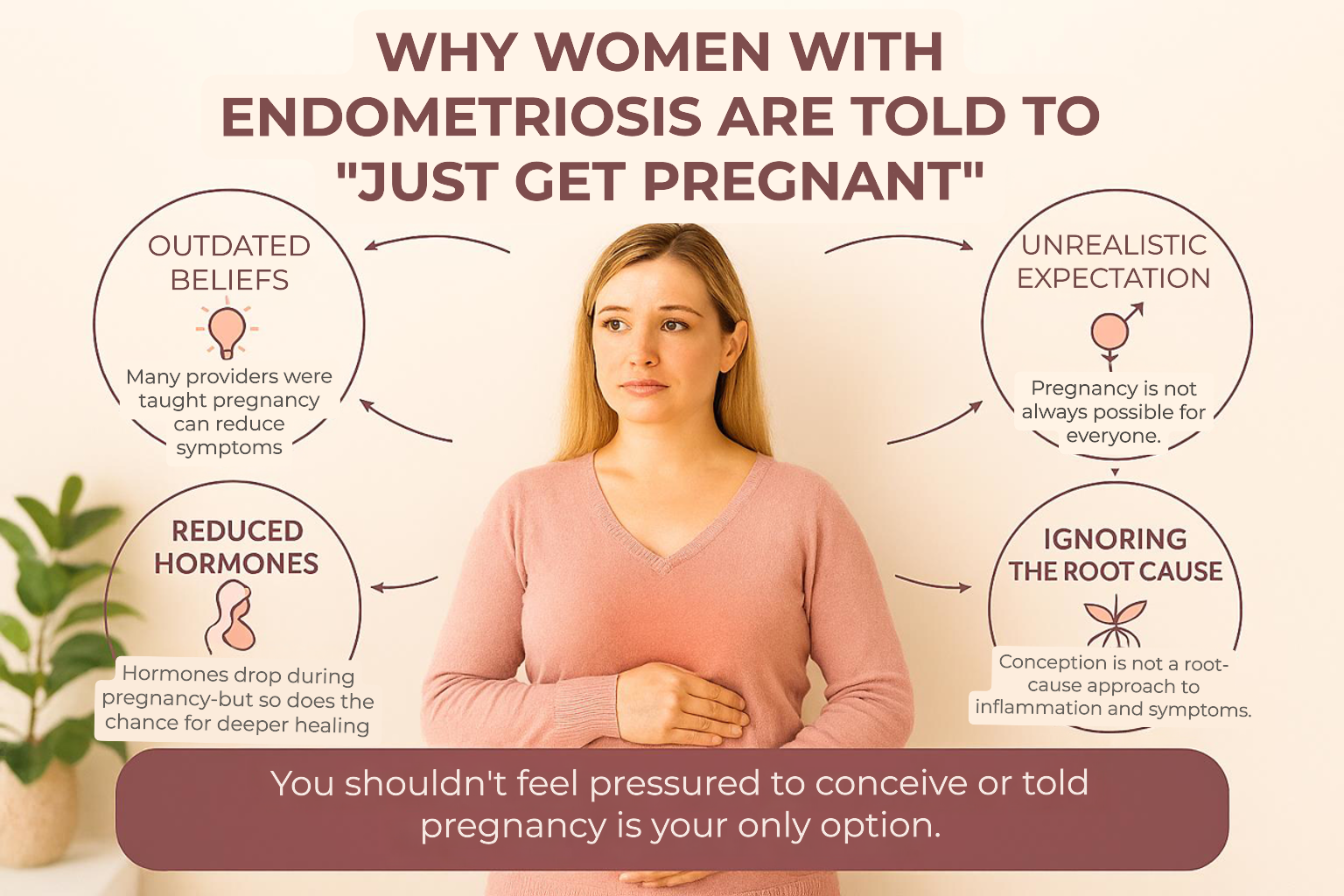
Imagine spending years living with debilitating pelvic pain, painful periods, digestive issues, fatigue, and inflammation only to be told:
“You should just get pregnant.”
For many women with endometriosis, this isn't a rare experience. In fact, it remains one of the most common pieces of advice women hear after finally receiving a diagnosis.
While this recommendation may have originated from observations that some women experience temporary symptom relief during pregnancy, it oversimplifies a complex inflammatory disease and can leave women feeling dismissed, frustrated, and unsupported.
Pregnancy is not a treatment for endometriosis.
More importantly, not every woman wants to become pregnant, is ready to become pregnant, or is physically able to become pregnant.
At Vargo Vision Functional Wellness, we believe women deserve evidence-based information and root-cause solutions not outdated myths. Through a functional medicine approach, we look beyond symptom management and explore the deeper factors contributing to endometriosis, including inflammation, hormone imbalance, immune dysfunction, gut health, nervous system dysregulation, and environmental influences.
Let's explore why this advice became so common and why it's time for a more informed conversation.
What Is Endometriosis?
Endometriosis is a chronic inflammatory, estrogen-driven condition in which tissue similar to the lining of the uterus grows outside the uterus.
These endometrial-like lesions are commonly found on:
Ovaries
Fallopian tubes
Bladder
Bowel
Pelvic lining
Abdominal tissue
However, endometriosis is increasingly recognized as a whole-body disease. Lesions have also been identified in:
The diaphragm
Lungs
Skin
Surgical scars
Nerves
Rarely, even the brain
Unlike normal uterine tissue, these lesions can create their own inflammatory environment, blood supply, and nerve growth. This may contribute to chronic pain, heightened sensitivity, and ongoing inflammation.
Because these lesions are highly responsive to estrogen, hormonal imbalances and impaired estrogen metabolism may contribute to symptom progression.
Where Did the “Just Get Pregnant” Advice Come From?
Historically, healthcare providers observed that some women reported improvement in endometriosis symptoms during pregnancy.
This led to the assumption that pregnancy could somehow "treat" or "cure" endometriosis.
The reality is more nuanced.
During pregnancy:
Ovulation stops
Progesterone levels rise significantly
Menstrual cycles temporarily cease
Estrogen fluctuations change
Some inflammatory processes may decrease
As a result, some women experience temporary symptom improvement.
However, temporary relief does not mean the disease has disappeared.
The lesions themselves often remain present.
Pregnancy Does Not Cure Endometriosis
This is one of the most important facts women deserve to understand.
Pregnancy does not eliminate endometriosis lesions.
Pregnancy does not reverse scar tissue.
Pregnancy does not correct immune dysfunction.
Pregnancy does not address gut dysbiosis.
Pregnancy does not permanently resolve hormone imbalances.
Pregnancy creates a temporary hormonal environment that may reduce symptoms in some women but once cycles return postpartum, symptoms may return as well.
Some women experience symptom improvement during pregnancy.
Others do not.
Some women even experience worsening symptoms.
Every woman is different.
Why This Advice Can Be Harmful
While often well-intentioned, telling a woman to "just get pregnant" can be deeply invalidating.
It Minimizes a Complex Disease
Endometriosis is not simply a reproductive problem.
It is a whole-body inflammatory condition involving:
Hormones
Immune function
Gut health
Nervous system regulation
Inflammation pathways
Genetics
Environmental influences
Reducing this complexity to pregnancy oversimplifies the disease.
It Ignores a Woman's Life Circumstances
Not every woman:
Wants children
Is ready for pregnancy
Has a partner
Can safely become pregnant
Has the financial resources to start a family
Women deserve care regardless of their reproductive choices.
It May Delay Appropriate Treatment
When women are repeatedly told pregnancy is the solution, it can delay:
Proper diagnosis
Root-cause investigation
Nutritional support
Hormonal evaluation
Gut health assessment
Inflammation management
The longer underlying imbalances remain unaddressed, the more symptoms may progress.
It Can Create Shame and Guilt
Women struggling with infertility often hear this advice as well.
Being told pregnancy is the answer can create feelings of:
Failure
Shame
Isolation
Self-blame
No woman should feel responsible for a disease she did not cause.
Understanding the Root Causes of Endometriosis
Functional medicine asks a different question:
Why is the body creating an environment where endometriosis can thrive?
While there is no single cause, several contributing factors commonly emerge.
Estrogen Dominance
Endometriosis is considered an estrogen-sensitive condition.
Excess estrogen activity may contribute to:
Lesion growth
Inflammation
Heavy periods
Breast tenderness
PMS symptoms
Pelvic pain
Supporting healthy estrogen metabolism is often a key component of functional medicine care.
Chronic Inflammation
Inflammation fuels many of the symptoms associated with endometriosis.
Inflammatory chemicals released by lesions may contribute to:
Pain
Fatigue
Brain fog
Digestive symptoms
Mood changes
Reducing inflammatory burden becomes a major therapeutic goal.
Gut Health Dysfunction
The gut plays a critical role in:
Hormone metabolism
Immune regulation
Inflammation control
Nutrient absorption
Many women with endometriosis also experience:
Bloating
IBS-like symptoms
Food sensitivities
Constipation
Diarrhea
Gut dysbiosis may contribute to both hormonal imbalance and chronic inflammation.
Immune Dysfunction
Research increasingly suggests that endometriosis involves altered immune function.
Normally, the immune system helps clear abnormal tissue growth.
In endometriosis, immune regulation may be impaired, allowing lesions to persist and inflammation to continue.
Nervous System Dysregulation
Living with chronic pain changes the nervous system.
Many women develop:
Heightened pain sensitivity
Anxiety
Sleep disturbances
Stress intolerance
Fatigue
As a PMHNP-BC, I often see how closely emotional health and physical health are connected.
Supporting the nervous system is a critical piece of healing.
A Functional Medicine Approach to Endometriosis
Rather than focusing solely on symptom suppression, functional medicine seeks to understand the body's interconnected systems.
Healing often involves addressing multiple contributors simultaneously.
Anti-Inflammatory Nutrition
Nutrition can help regulate inflammation and support hormone balance.
Focus on:
Colorful vegetables
Omega-3-rich foods
Lean proteins
Fiber-rich foods
Healthy fats
Reduce:
Ultra-processed foods
Excess sugar
Alcohol
Artificial additives
Supporting Estrogen Metabolism
Healthy estrogen detoxification depends heavily on:
Liver function
Gut health
Regular bowel movements
Nutrient status
Supportive strategies may include:
Increasing fiber
Staying hydrated
Prioritizing sleep
Supporting gut health
Restoring Gut Health
Improving gut function may support:
Hormone balance
Immune regulation
Reduced inflammation
Better digestion
Gut healing is often a foundational piece of care.
Stress and Nervous System Support
The body heals best when it feels safe.
Helpful strategies may include:
Breathwork
Meditation
Therapy
Gentle exercise
Sleep optimization
Nervous system regulation techniques
Personalized Functional Medicine Testing
Testing may help uncover:
Hormonal imbalances
Gut dysfunction
Nutrient deficiencies
Cortisol dysregulation
Inflammatory markers
Every woman's story is different, which is why personalized care matters.
Actionable Takeaways
If you've been told to "just get pregnant," remember:
1. Pregnancy Is Not a Cure
Temporary symptom relief does not equal disease resolution.
2. Your Symptoms Are Valid
Pain is not something you should simply endure.
3. You Deserve Root-Cause Answers
Look beyond symptom management alone.
4. Support Your Whole Body
Focus on nutrition, hormones, gut health, inflammation, and stress resilience.
5. Advocate for Yourself
You deserve providers who listen, investigate, and support your long-term health goals.
Women Deserve Better Answers
Endometriosis is a complex inflammatory disease not a condition solved by pregnancy.
While pregnancy may temporarily alter symptoms for some women, it is not a treatment, cure, or replacement for comprehensive healthcare.
At Vargo Vision Functional Wellness, we believe women deserve compassionate, evidence-informed, root-cause care that addresses the whole person.
You deserve more than outdated advice.
You deserve answers.
Ready to Take the Next Step?
If you're struggling with painful periods, bloating, fatigue, hormone imbalance, digestive symptoms, infertility concerns, or chronic inflammation, you don't have to navigate this alone.
Book your Free Discovery Call today:
https://vargovision.com/book-now
Together, we can uncover the root contributors affecting your health and create a personalized plan that supports long-term healing.
Your symptoms are real.
Your health matters.
And you deserve more than symptom suppression.
Frequently Asked Questions
Does pregnancy cure endometriosis?
No. Pregnancy may temporarily reduce symptoms for some women, but it does not eliminate lesions or cure the disease.
Why do some women feel better during pregnancy?
Hormonal changes during pregnancy may temporarily reduce lesion activity and inflammation.
Can symptoms return after pregnancy?
Yes. Many women experience symptom recurrence after menstrual cycles return.
Is endometriosis caused by infertility?
No. Endometriosis can contribute to fertility challenges, but infertility does not cause endometriosis.
Can functional medicine help support women with endometriosis?
Functional medicine focuses on identifying root contributors such as inflammation, hormone imbalance, gut dysfunction, and immune dysregulation to support whole-body healing.
Ready to Explore a Different Approach?
At Vargo Vision Functional Wellness, we focus on uncovering the root contributors to your symptoms and building a plan that supports your body holistically.
👉 Book your free discovery call today and start finding real answers