
Why You Can Have Thyroid Symptoms With “Normal” Labs

Why You Can Have Thyroid Symptoms With “Normal” Labs
Your thyroid test results are only one part of the picture. Here's what they can, and cannot, tell you.

You feel exhausted even after a full night's sleep. Your weight has changed. You're struggling with brain fog, dry skin, constipation, or feeling cold when everyone else seems comfortable.
You finally get your thyroid tested, only to hear that your results are normal.
So why don't you feel normal?
It's a frustrating situation, especially when the symptoms are affecting your daily life and you still don't have a clear explanation.
The important thing to understand is that normal thyroid test results do not mean your symptoms aren't real. They do, however, provide important information about how your thyroid is functioning. The next step is to understand what was tested, how the results were interpreted, and whether something else could be contributing to how you feel.
At Vargo Vision Functional Wellness, we look at thyroid health within the context of the body's interconnected systems, while recognizing that symptoms alone cannot establish a thyroid diagnosis.
Let's explore seven reasons you may experience thyroid-like symptoms even when your lab results fall within the reference range.
1. Your Symptoms May Be Coming From Something Other Than Your Thyroid
Fatigue, weight changes, hair thinning, constipation, low mood, and difficulty concentrating are often associated with hypothyroidism. However, they are not unique to thyroid disease.
Several other factors can produce similar symptoms, including:
Poor sleep quality or sleep disorders
Iron deficiency or anemia
Vitamin B12 deficiency
Depression or persistent stress
Medication side effects
Perimenopause and menopause
Blood sugar disorders
Other medical conditions
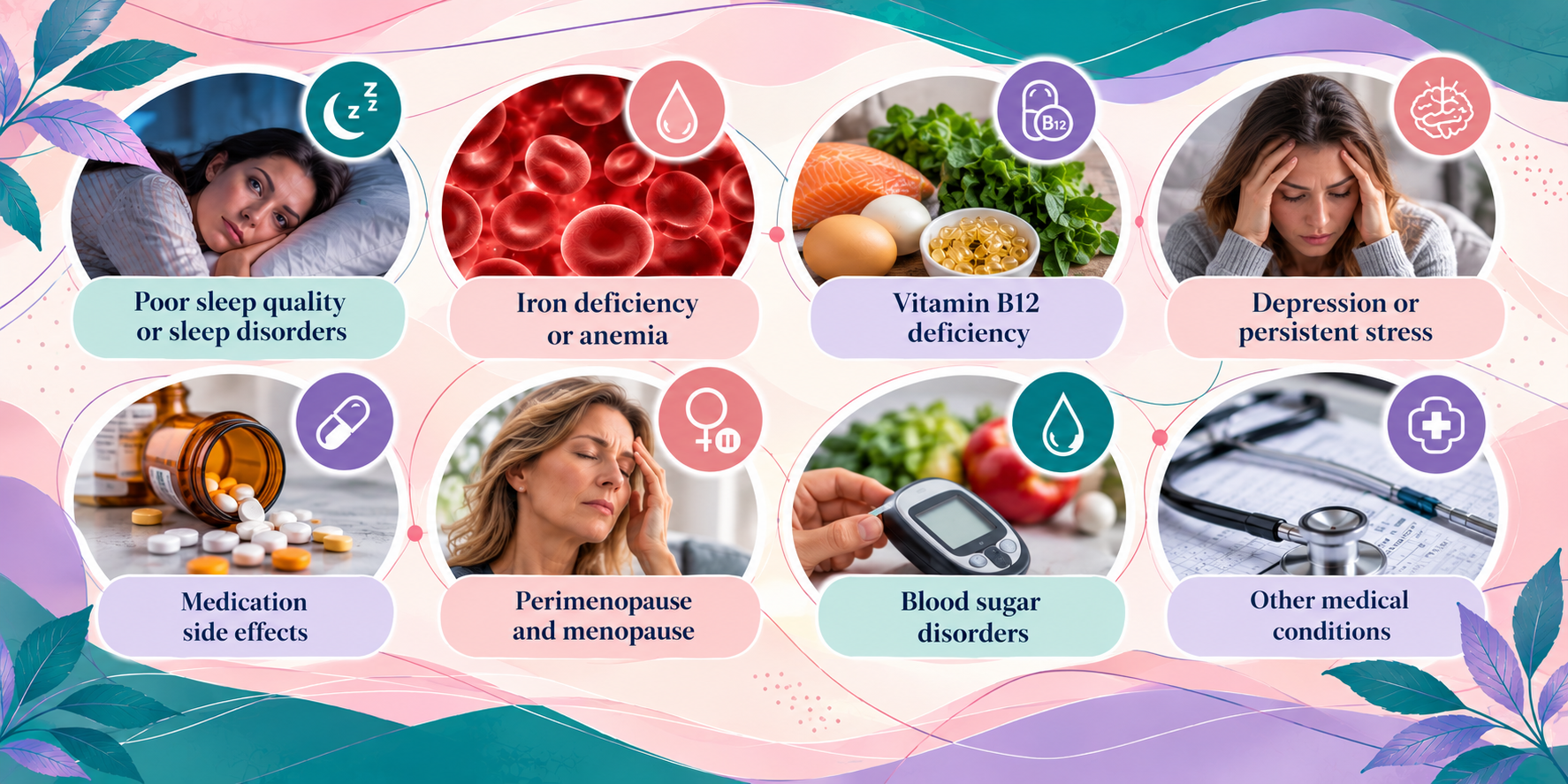
This is why treating every symptom as a thyroid problem can lead to missed answers.
The goal isn't to force every symptom into a thyroid diagnosis. It's to identify the most likely explanation for your particular symptoms.
2. You May Not Have Had All the Appropriate Thyroid Tests
Thyroid testing is not one single test. Different tests answer different questions.
TSH (thyroid-stimulating hormone)
Usually the first test used to evaluate thyroid function. It measures the signal from the pituitary gland that tells the thyroid how much hormone to produce.
Free T4
Measures the unbound form of thyroxine circulating in your blood. It can help clarify thyroid function when interpreted alongside TSH.
Thyroid antibodies
Tests such as thyroid peroxidase antibodies (TPOAb) and thyroglobulin antibodies (TgAb) can help identify autoimmune thyroid disease, including Hashimoto's.
These tests are not interchangeable. TSH and free T4 help assess thyroid function, while antibodies help identify an autoimmune process.
For most healthy adults, TSH is an effective initial test. Free T4, antibody testing, or additional evaluation may be appropriate depending on your results, medical history, and symptoms.
More testing is not automatically better. The right tests are the ones that answer a specific clinical question.
3. You Could Have Hashimoto's Before Your Thyroid Hormone Levels Become Abnormal
Hashimoto's thyroiditis is an autoimmune condition in which the immune system mistakenly targets the thyroid.
In its earlier stages, a person may have detectable thyroid antibodies while TSH and free T4 remain within their reference ranges. The thyroid may still be producing enough hormone to maintain normal function\
This distinction matters:
Thyroid autoimmunity means the immune system is reacting against thyroid tissue.
Hypothyroidism means the thyroid is not producing enough hormone for the body's needs.
They can occur together, but they are not the same thing.
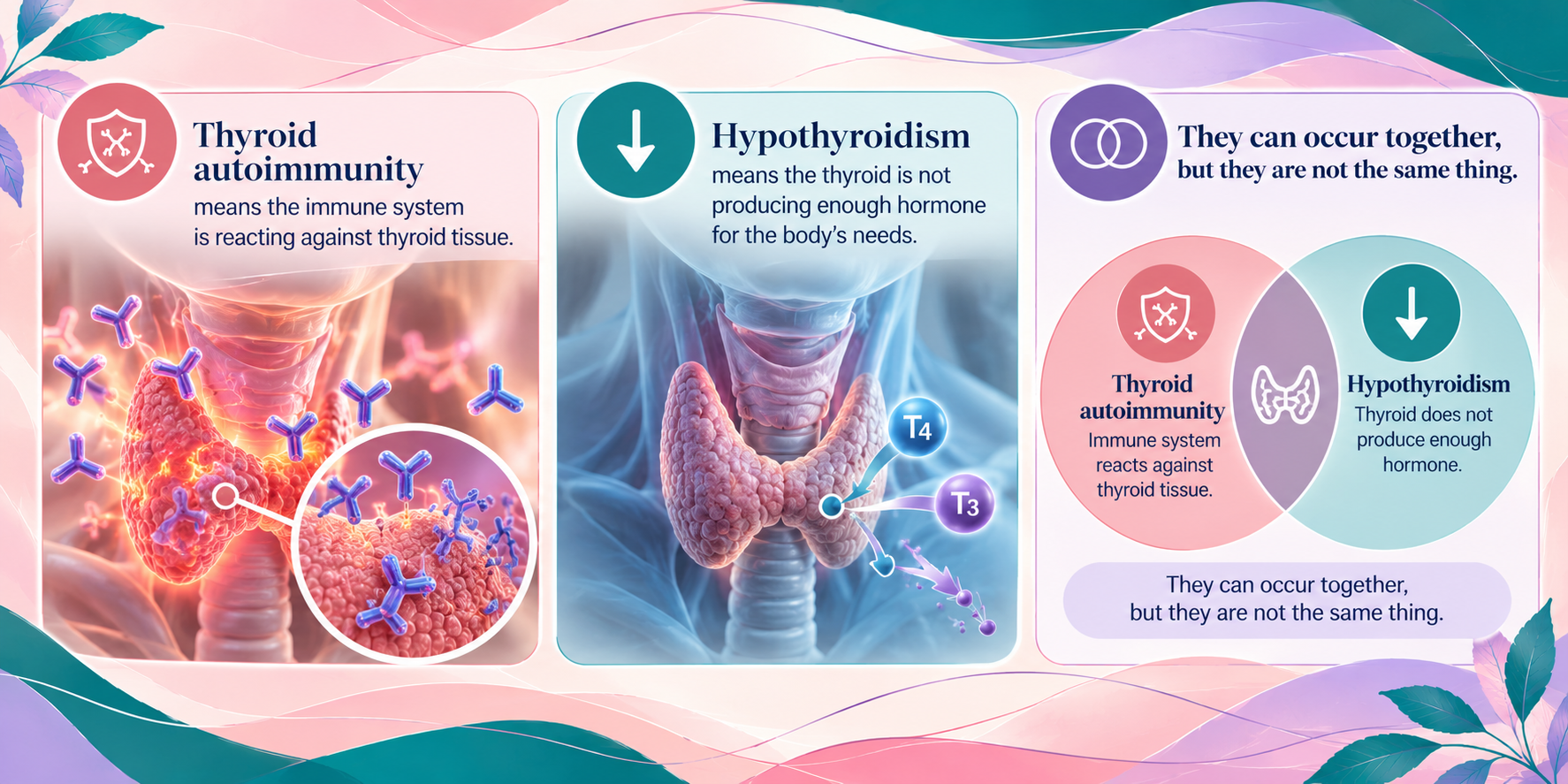
Some people with Hashimoto's maintain normal thyroid function for years. Others develop hypothyroidism over time.
If antibodies are elevated but thyroid function remains normal, thyroid hormone medication is generally not recommended solely because of the antibody result. Monitoring may be appropriate, depending on the clinical situation.
It is also important not to assume that thyroid antibodies explain every symptom. Their presence is one piece of clinical information, not proof that all your symptoms are thyroid-related.
4. Your Thyroid Function May Need to Be Reassessed Over Time
Thyroid function can change. Hashimoto's, for example, often progresses slowly, and early disease may not produce obvious symptoms or abnormal thyroid hormone levels.
A result from several months or years ago may not fully reflect your current situation.
Depending on your symptoms and medical history, your healthcare provider may recommend repeating thyroid tests. This can be particularly relevant when:
Symptoms are new or have become more pronounced.
Previous results were borderline or changing.
You have known thyroid antibodies.
You have a history of thyroid disease.
You are pregnant, planning pregnancy, or recently gave birth.
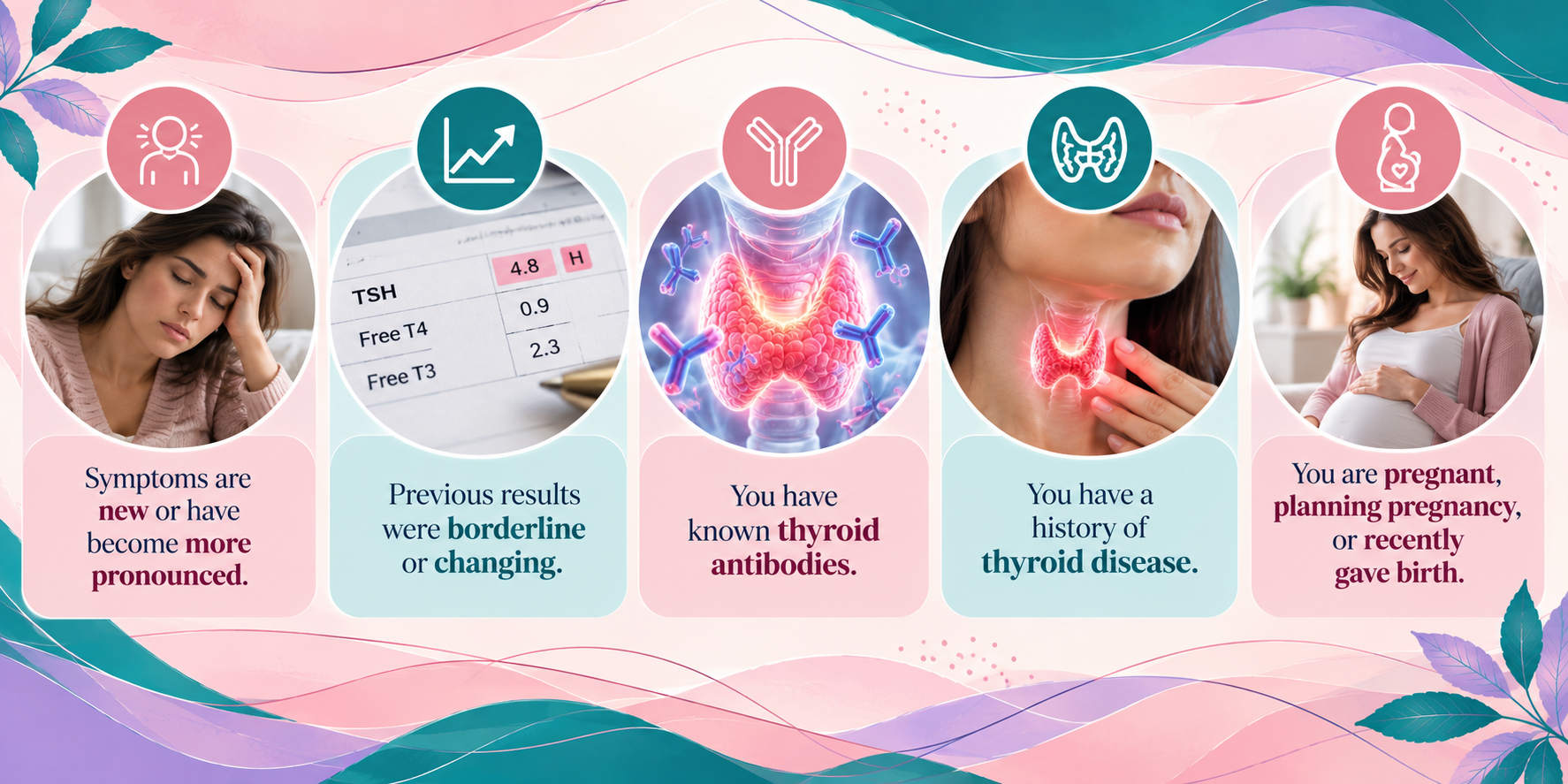
This does not mean everyone with fatigue needs repeated thyroid testing. The timing should be guided by your clinical circumstances.
5. Certain Supplements and Medical Factors Can Affect Test Results
Sometimes the issue isn't thyroid function itself, but how a test result is measured or interpreted.
Biotin is an important example. It is commonly found in hair, skin, and nail supplements and some multivitamins. Depending on the laboratory method, biotin can interfere with thyroid tests and produce misleading results.
Other factors, including pregnancy, certain medications, severe illness, and changes in thyroid-binding proteins, can affect the interpretation of some thyroid measurements.
If you take supplements or prescription medications, tell your healthcare provider before testing. Do not stop prescribed medication on your own. Ask whether any supplements need to be paused and follow the laboratory or clinician's instructions.
6. Rarely, a Normal TSH Can Miss a Problem Higher Up the Hormone Pathway
Your thyroid does not work independently. It receives instructions from the hypothalamus and pituitary gland in the brain.
The pathway works like this:
Hypothalamus
Signals the pituitary
Pituitary gland
Produces TSH
Thyroid gland
Produces T4 and T3
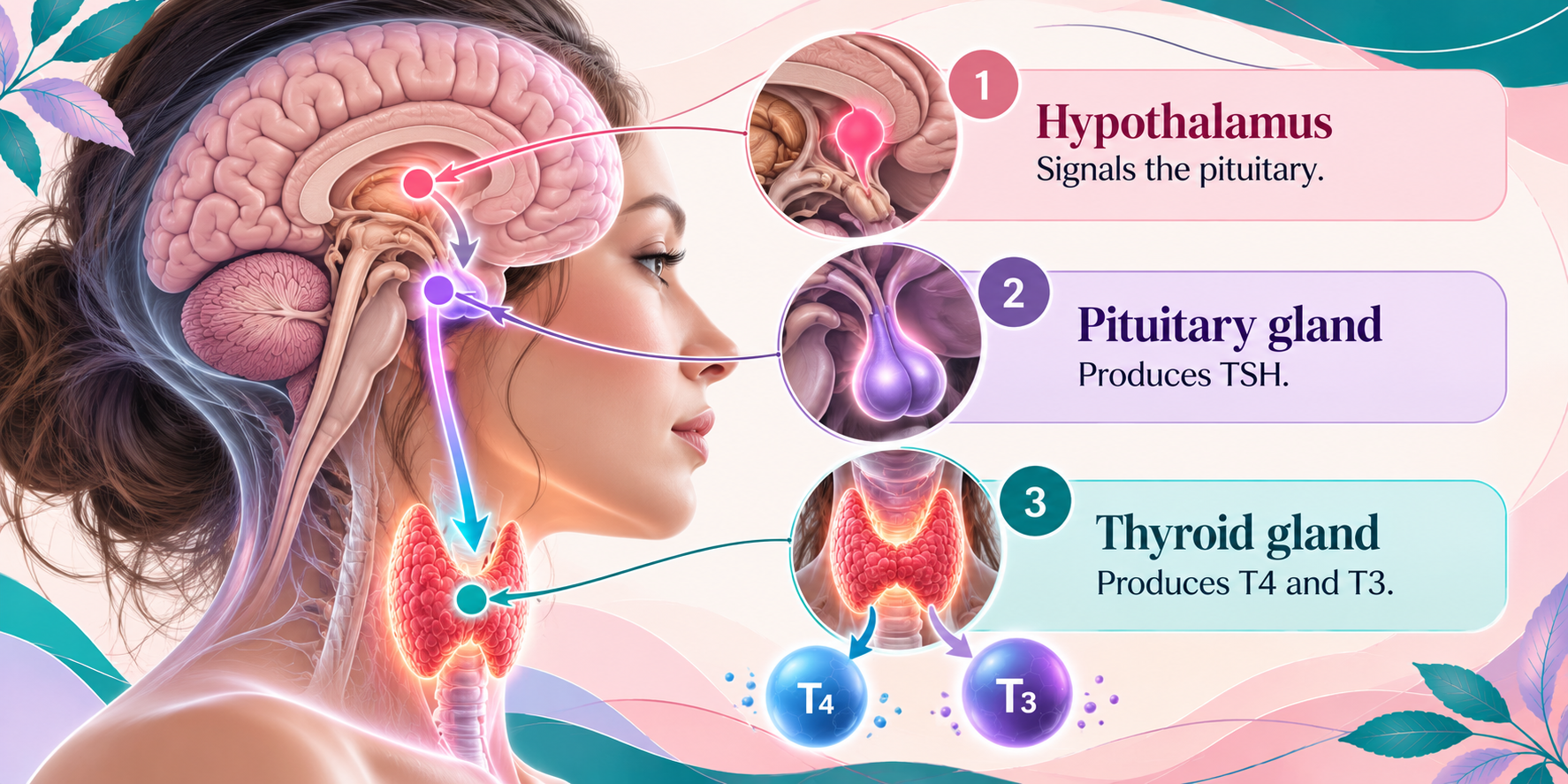
In rare cases, a problem involving the pituitary or hypothalamus can cause central hypothyroidism. In this situation, TSH may be normal or low despite a low free T4. TSH alone may therefore be insufficient to identify the problem.
This is uncommon and is not the most likely explanation for persistent fatigue or brain fog. However, it illustrates why test results sometimes need to be interpreted together rather than in isolation.
7. Your Results May Be Normal, but Another Health Issue Needs Attention
One of the most important possibilities is that your thyroid is functioning normally and another condition is causing your symptoms.
For example, fatigue may be associated with iron deficiency, sleep apnea, depression, medication effects, or other medical conditions. Weight changes may relate to menopause, activity levels, nutrition, medications, or metabolic factors.
The American Thyroid Association specifically discusses the importance of evaluating other explanations when people continue to experience symptoms despite normal thyroid function tests
Rather than repeatedly expanding thyroid testing without a clear reason, it may be more useful to review your symptoms systematically with your healthcare provider.
Depending on your history, that could include reviewing sleep, menstrual changes, medications, nutrition, blood counts, iron status, and other targeted tests.
The right evaluation depends on the pattern of symptoms, not a standard checklist that everyone needs.
What Does “Normal” Thyroid Testing Actually Mean?
A laboratory reference range describes the values commonly seen in a reference population. It helps clinicians interpret results, but it does not independently explain every symptom you experience.
For most healthy adults, a normal TSH is reassuring evidence that the thyroid is functioning appropriately. When TSH and free T4 are both normal, primary hypothyroidism is generally unlikely. However, the interpretation may differ in specific situations, such as suspected pituitary disease, pregnancy, or certain medication effects.
It is also important to distinguish between a laboratory reference range and the idea of an “optimal” range.
You may see claims online that everyone should aim for a particular TSH number, even when their results fall within the laboratory's reference range. There is no single universally accepted “optimal” TSH target for every person. Age, pregnancy status, medical history, medications, and the clinical situation all matter.
The goal is not to chase a number. It is to understand what your results mean in the context of your health.
What Should You Do If Your Thyroid Labs Are Normal but You Still Feel Unwell?
Start by bringing the symptoms, not just the lab report, to your next appointment.
Here are some practical steps:
Write down your symptoms. Note when they started, how often they occur, and whether they are getting worse.
Review the actual results. Ask which tests were performed, what the results were, and whether additional testing is clinically appropriate.
Discuss your medications and supplements. Include vitamins, hair and nail supplements, and any thyroid medication you take.
Consider other possible contributors. Sleep quality, iron deficiency, reproductive hormone changes, medication effects, and other conditions may need evaluation.
Ask about follow-up. Find out whether monitoring or repeat testing makes sense for your situation.
If you are taking thyroid medication, do not increase, decrease, or stop it without guidance from your prescribing clinician. Treating someone who does not have hypothyroidism with thyroid hormone can cause harm, including abnormal heart rhythms and bone loss.
Seek prompt medical evaluation if symptoms are severe or rapidly worsening. New neck swelling or difficulty swallowing also warrants medical assessment.
Looking at Thyroid Health Through a Whole-System Lens
At Vargo Vision Functional Wellness, we recognize that health involves interconnected systems. But a whole-system approach does not mean assuming every problem starts in the gut, hormones, or thyroid.
It means asking the right questions and evaluating the evidence.
The bigger picture
Nutrition
Gut Health and Immune Function
Metabolism and Sleep
Stress, Thyroid Function, and Lifestyle
These systems interact in complex ways. The sequence is a framework for considering health, not a proven causal pathway or a diagnostic test.
For example, nutrition can influence iron and other nutrient status. Sleep affects energy and cognitive function. Autoimmune conditions may involve the thyroid. Menopause can bring symptoms that overlap with hypothyroidism.
These connections can help guide a thoughtful evaluation, but they do not establish that a particular system is responsible for your symptoms. Each possible cause needs to be assessed on its own merits.
The Bottom Line
You can experience fatigue, brain fog, hair changes, weight fluctuations, and other symptoms even when your thyroid labs are normal.
Sometimes the explanation involves an autoimmune thyroid condition that has not yet impaired hormone production. Sometimes testing needs to be interpreted differently because of a specific medical circumstance. And sometimes the thyroid is not the cause at all.
Normal results are valuable information, not a reason to dismiss how you feel.
The next step is not necessarily more thyroid tests or thyroid supplements. It is a thoughtful evaluation that connects your symptoms, medical history, test results, and other possible contributors.
At Vargo Vision Functional Wellness, understanding the bigger picture starts with asking better questions, using appropriate testing, and avoiding assumptions about what your body needs.
Frequently Asked Questions
Can you have Hashimoto's with normal thyroid labs?
Yes. Thyroid antibodies can be present while TSH and free T4 remain normal. This can indicate thyroid autoimmunity without current hypothyroidism. Monitoring may be appropriate, but thyroid hormone medication is generally not prescribed solely because antibodies are elevated.
Can normal TSH miss hypothyroidism?
In most healthy adults, TSH is an effective initial test for primary hypothyroidism. Rarely, central hypothyroidism can occur when the pituitary or hypothalamus is not signaling appropriately. In that situation, free T4 may be low even when TSH is not elevated.
Should I ask for T3, free T3, or reverse T3 testing?
These tests are not routinely needed to diagnose hypothyroidism. The American Thyroid Association notes that T3 testing is rarely helpful for diagnosing an underactive thyroid, and reverse T3 testing is not clinically useful for this purpose in healthy, non-hospitalized people. Your clinician can determine whether any additional test is appropriate.
Can you have thyroid symptoms even if your thyroid is healthy?
Yes. Symptoms such as fatigue, cold intolerance, weight changes, and brain fog can occur for many reasons. If thyroid function is normal, a clinician can help evaluate other possible explanations.
Should I take thyroid supplements if my labs are normal?
Not without an appropriate medical indication. Thyroid hormone should not be used simply to treat nonspecific symptoms when hypothyroidism has not been established. Some supplements also contain iodine or other ingredients that can affect thyroid health. Discuss supplements with your healthcare provider before starting them.
How often should thyroid levels be checked?
The appropriate interval depends on your medical history, symptoms, medications, pregnancy status, and previous results. People with known Hashimoto's may need periodic TSH monitoring, while others may not need frequent repeat testing. Follow your clinician's recommendations.