Why You're Always Bloated (And It May Not Be the Food)
Why You're Always Bloated (And It May Not Be the Food)
Bloating Isn't Always About What You Eat
Feeling bloated after a meal is common from time to time.
But if you're constantly dealing with abdominal bloating, tight-fitting clothes, excessive gas, or the feeling that your stomach is always swollen, it's worth asking a different question:
What if the food isn't actually the problem?
At Vargo Vision Functional Wellness, we often see women who have eliminated dairy, gluten, sugar, and countless other foods, yet they still experience bloating every day.
While certain foods can contribute to digestive discomfort, persistent bloating is often a symptom of something deeper.
Functional medicine focuses on identifying why bloating is happening rather than simply removing more foods from your diet.
Bloating Is a Symptom—Not a Diagnosis
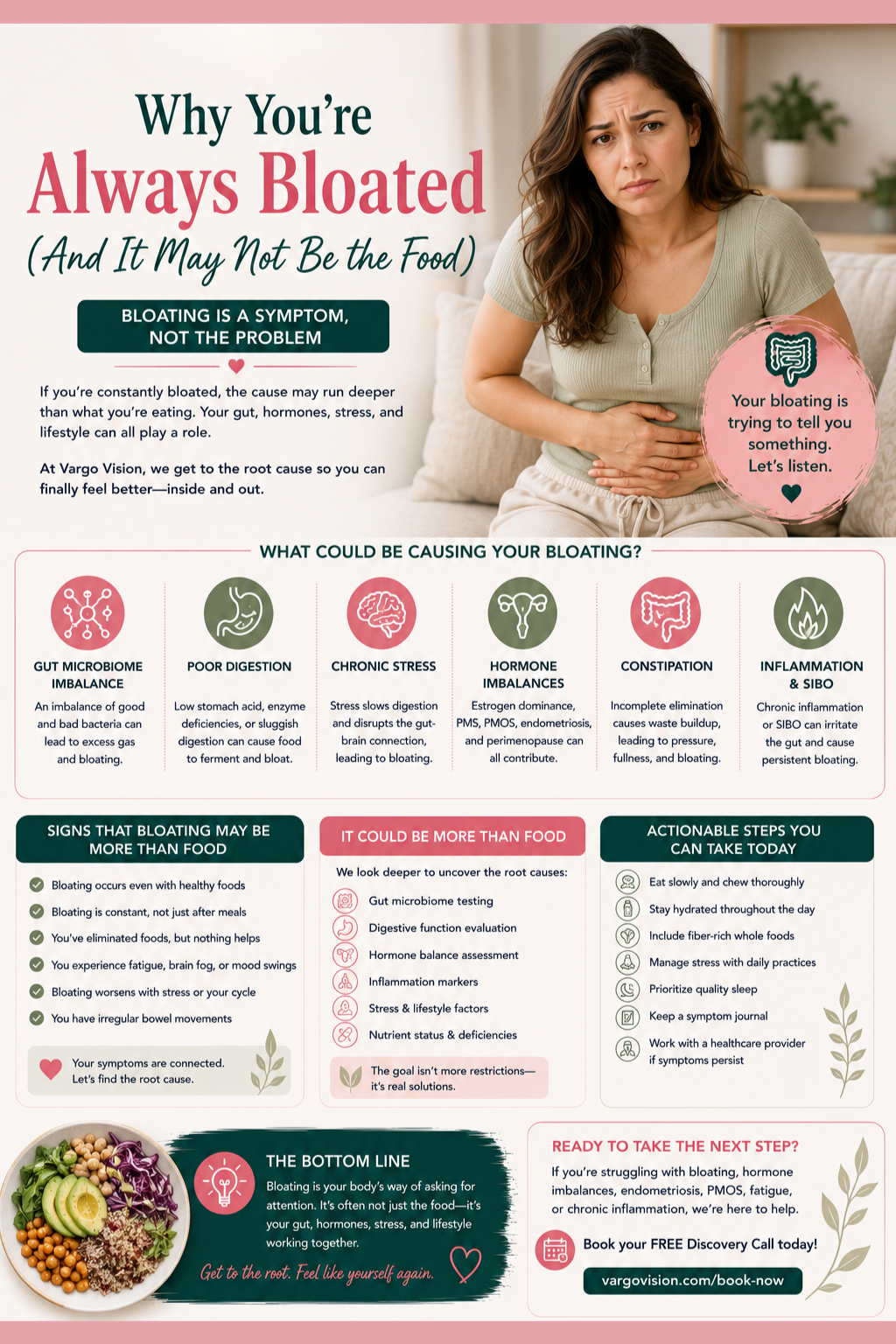
Bloating can result from many different factors, including:
Gut microbiome imbalances
Poor digestion
Chronic stress
Constipation
Food intolerances
Hormone imbalances
Chronic inflammation
Small intestinal bacterial overgrowth (SIBO)
Because there are many possible contributors, finding the root cause is essential for lasting relief.
The Gut-Hormone Connection
Many women notice their bloating worsens around their menstrual cycle.
That's because hormones and gut health are closely connected.
Changes in estrogen and progesterone can influence:
Digestion
Gut motility
Water retention
Inflammation
Bowel habits
This is one reason women with endometriosis, PMOS, PMS, or perimenopause often experience ongoing bloating.
Stress Can Slow Digestion
Your digestive system functions best when your body is in a relaxed state.
Chronic stress activates the body's "fight-or-flight" response, which may reduce stomach acid production, slow digestion, and affect the balance of healthy gut bacteria.
Over time, this can contribute to bloating, gas, and digestive discomfort—even if you're eating nutritious foods.
Your Gut Microbiome Matters
The trillions of bacteria living in your digestive tract play an important role in digestion, nutrient absorption, inflammation, and hormone metabolism.
When these bacteria become imbalanced, excess gas production and digestive symptoms may occur.
Supporting a healthy gut microbiome is one of the reasons functional medicine often begins with gut health.
Could It Be More Than Food?
If you've already removed multiple foods from your diet but continue to feel bloated, it may be time to look deeper.
Functional medicine may evaluate factors such as:
Gut microbiome health
Digestive function
Hormone balance
Chronic inflammation
Lifestyle habits
Stress levels
Nutrient status
The goal isn't to create a longer list of foods to avoid.
The goal is to understand why your digestive system isn't functioning optimally.
Actionable Steps You Can Take Today
Eat slowly and chew your food thoroughly.
Stay hydrated throughout the day.
Include fiber-rich whole foods gradually.
Manage stress with daily relaxation practices.
Prioritize quality sleep.
Keep a symptom journal to identify patterns.
Avoid unnecessary restrictive diets without guidance.
Work with a qualified healthcare provider if bloating persists.
Small changes can support healthier digestion—but lasting relief starts with identifying the root cause.
The Bottom Line
Persistent bloating is your body's way of asking for attention.
While food can certainly play a role, it's often only one piece of the puzzle.
At Vargo Vision Functional Wellness, we believe lasting digestive health comes from understanding how the gut, hormones, inflammation, and lifestyle all work together.
Instead of guessing, let's uncover what's really driving your symptoms.
Ready to Take the Next Step?
If you're struggling with bloating, digestive discomfort, hormone imbalances, endometriosis, PMOS, fatigue, or chronic inflammation, we're here to help.
Book your Free Discovery Call today:
https://vargovision.com/book-now
Together, we'll uncover the root contributors affecting your health and create a personalized plan designed to support long-term wellness.
Frequently Asked Questions
Is bloating always caused by food?
No. While certain foods can contribute to bloating, persistent bloating may also be related to gut microbiome imbalances, stress, hormones, constipation, inflammation, or digestive dysfunction.
Can hormones cause bloating?
Yes. Hormonal fluctuations throughout the menstrual cycle, as well as conditions like endometriosis and PMOS, may contribute to bloating and water retention.
Why does functional medicine focus on gut health for bloating?
Because the gut influences digestion, inflammation, hormone metabolism, and the balance of healthy bacteria. Identifying the underlying cause often leads to more effective, long-term solutions.